🔴 Invasive - Remove
Mugwort
Artemisia vulgaris
This is an invasive species that harms native ecosystems. It should be removed when found to protect local plant and wildlife habitats.
Artemisia vulgaris
This is an invasive species that harms native ecosystems. It should be removed when found to protect local plant and wildlife habitats.
Tall, bushy plant with dark green leaves on top and silvery-white undersides. Aromatic (Sage like) when crushed. It spreads aggressively underground through rhizomes (root-like runners), forming dense patches that crowd out native plants.
Colour and texture: Dark green on top, bright silver-white and woolly underneath: the single most reliable check in the field. Crushed, it smells sharply of sage.
Flowers July–October; dead stalks stand all winter.
No showy flower at all. Tall, narrow spikes of tiny greenish-grey buds up the top third of the stem, drying to a dull brown rattle.
Why it matters: Those brown stalks are how you find last year’s patch in March, before anything has leafed out and while the rhizomes are still easiest to attack.
Anything with a taproot or shallow roots: garlic mustard, mile-a-minute, seedlings, honeysuckle runners.
Avoid: Do not yank. Speed is what snaps the stem at the root collar and leaves the half that matters behind.
A dense rhizome mat (mugwort above all) where digging only chops the roots into more plants.
It can stay on site. Top growth can stay. Bag anything with root in it: mugwort comes back from rhizome, and a pulled root left on soil is a new plant, not a dead one.
Goldenrod is one of the most valuable native plants we have. Hundreds of insect species feed on it, and it is the last big nectar source before frost. From a few feet away a non-flowering goldenrod and a mugwort look much the same: tall, upright, leafy, in the same rough ground. One check settles it, and you can do it with one hand: turn a leaf over. Asters get mistaken for both, and the same test works. An aster leaf is green underneath too.
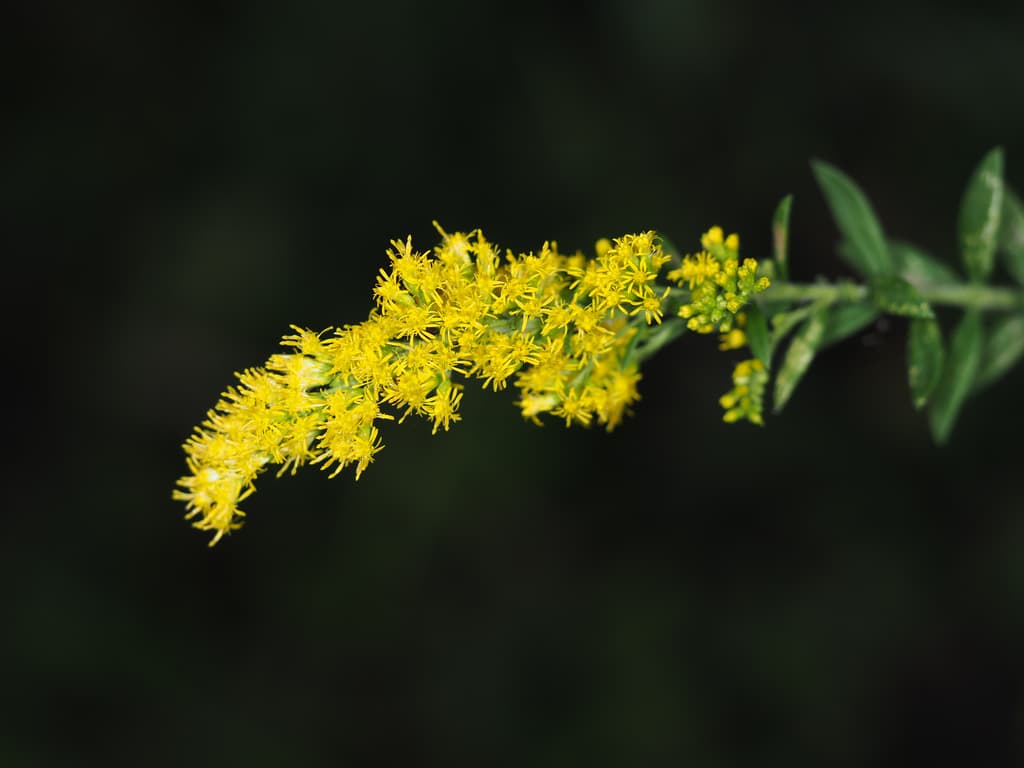
Goldenrod
Solidago spp.
Native: keepIn flower, August–October.
Used in teas and cooking, but contains thujone - avoid in high amounts or during pregnancy.
Avoid: Do not till or rotovate a rhizome mat. Every fragment you cut is a new plant.
Before the first cut: This one is hands, not blades: pull slowly to bring as much rhizome as you can, and never till or chop the roots.
How to remove it:
• Do NOT till – each root piece grows into a new plant.
• Pull out as much of the root as you can. It's okay if some break, repeat pulls over time will weaken it. While mugwort has no thorns or sap, it may cause skin irritation especially for those with allergies to ragweed, so wear .
• Alternatively, Smother with black plastic or layers of newspaper + mulch to block sunlight and starve the plant.
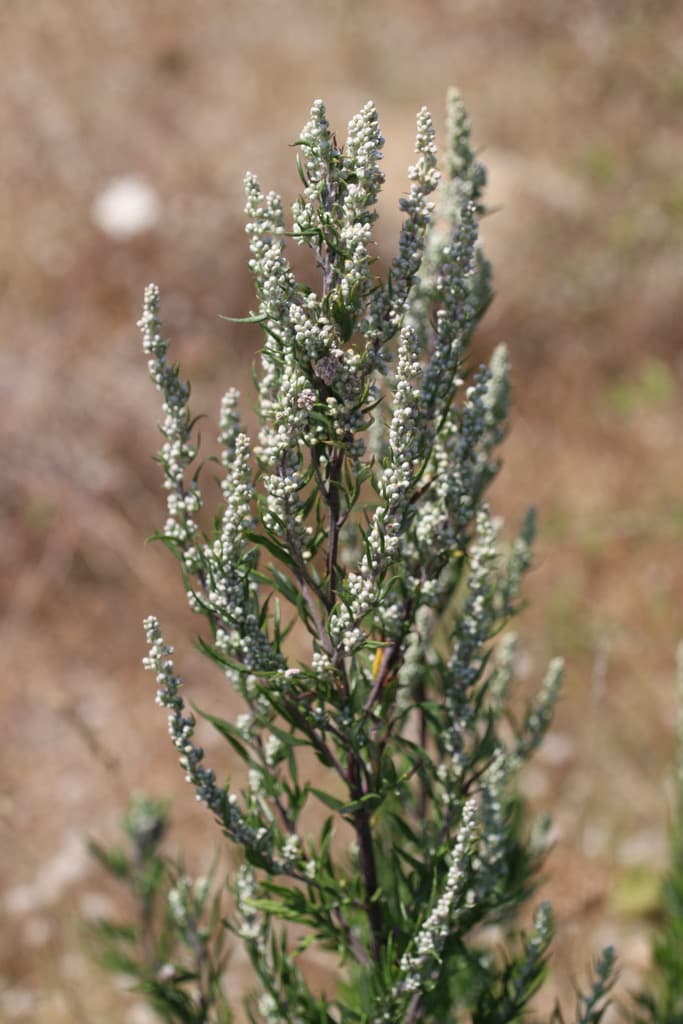
Mugwort
Artemisia vulgaris
Invasive: removeIn flower: drab greenish-grey spikes, no petals.
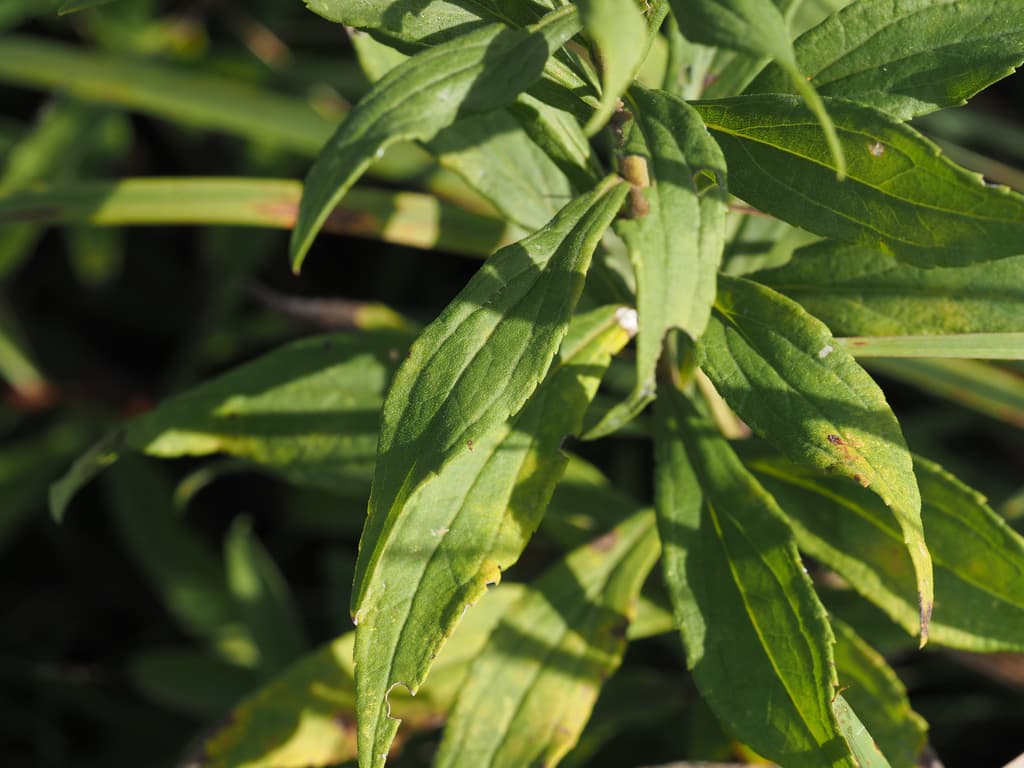
Goldenrod
Plain green underneath, the same shade as the top. Some species have a few hairs along the veins, but never a silver sheet.
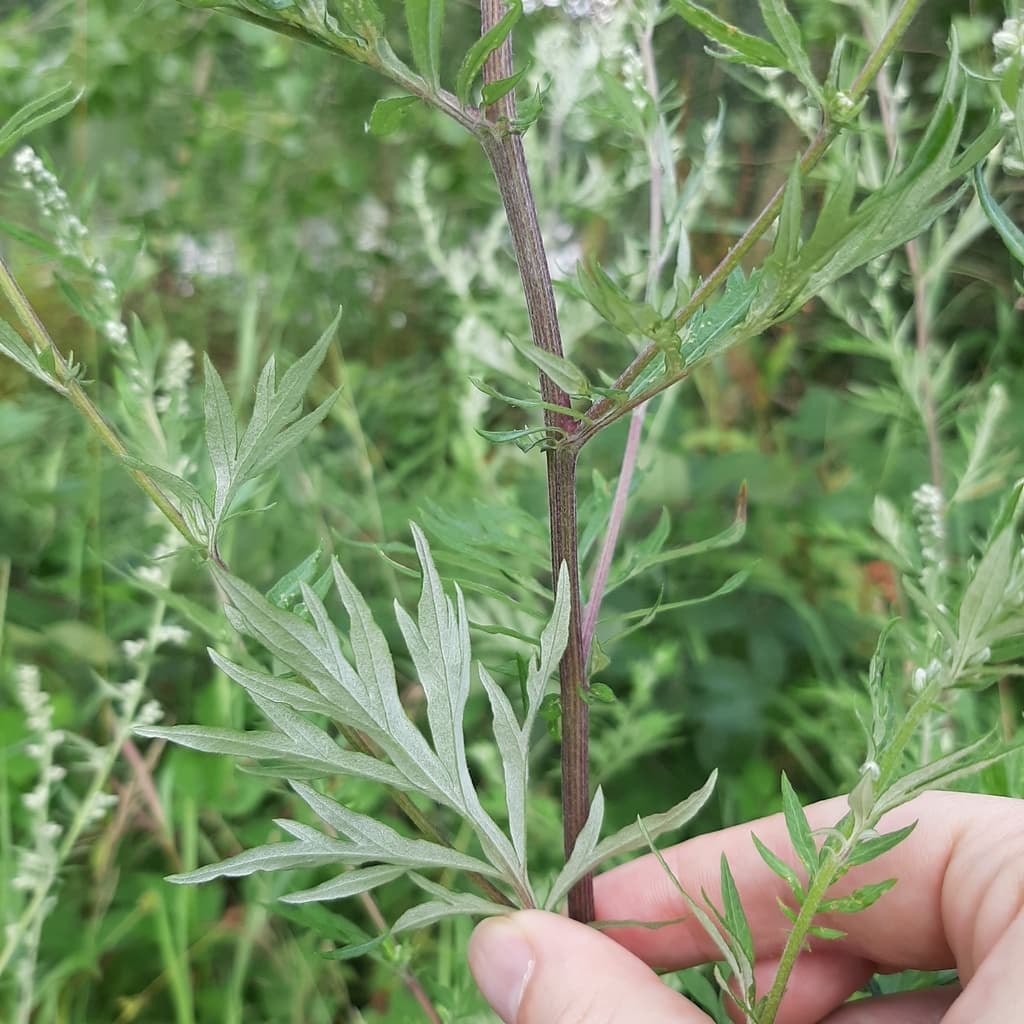
Mugwort
Bright silver-white and woolly underneath, like felt. Against the green top it looks two-toned when the wind moves it.
Goldenrod
One narrow, undivided blade with small teeth along the edge, and usually three veins running the length of it side by side.
Mugwort
Deeply cut almost to the midrib into sharp, pointed lobes, more like a chrysanthemum leaf. Leaves near the top of the stem are cut more finely than the ones below.
Goldenrod
Faint and green, or nothing much at all.
Mugwort
Strongly aromatic: sage, or the smell of a chrysanthemum. Unmistakable once you have done it twice.
Goldenrod
A big showy plume of bright yellow flowers, August to October. Nothing else looks like it, and it will be covered in bees.
Mugwort
Never showy. Narrow spikes of tiny greenish-grey buds that open to nothing you would call a flower and dry to brown.
Goldenrod
Usually one straight green stem, unbranched until the flower head, often finely hairy.
Mugwort
Grooved and ridged, frequently purple-tinged, branching part-way up.
Goldenrod
Meadows, old fields, stream meadows and sunny edges, usually mixed in with other plants.
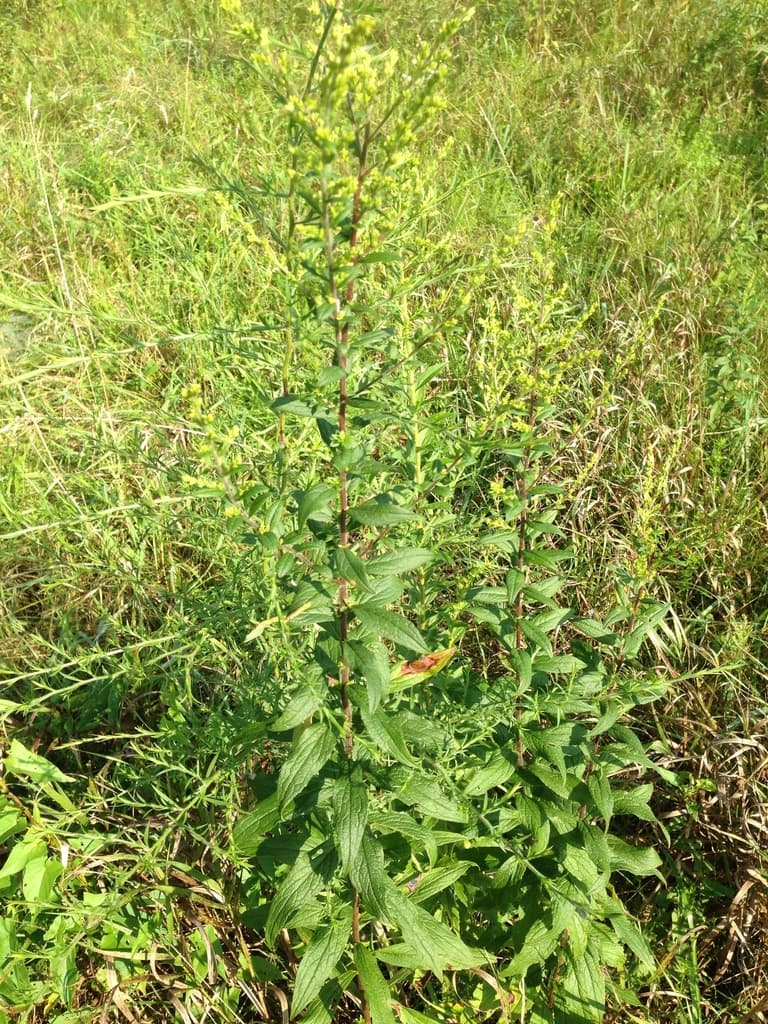
Mugwort
Roadsides, fill dirt, mown verges and scraped ground, very often as a solid single-species patch with nothing else left in it.
Early spring (rosettes, before anything is tall)
Goldenrod: A rosette of narrow, plain green leaves. Flip one and it is green underneath.
Mugwort: A rosette of deeply cut leaves, already silver-white on the back. The check works all year.
Winter (dead stalks)
Goldenrod: Fluffy off-white seedheads that catch the light, on a stiff unbranched stalk.
Mugwort: Brown, rattling, branched spikes with no fluff. These mark last year’s patch for next March.
When in doubt, leave the plant and ask a site lead before removing it.