The plants we target at our parties, the ones to leave standing, and how to tell them apart safely.
Before you start
🧤
Wear gloves
Some are included in our kit.
👕
Dress smart
Long sleeves, pants, and tall socks help protect against ticks and scrapes.
🌿
Watch for Poison Ivy
Learn to identify it (leaves of three, let it be) and wash exposed skin promptly after contact.
🧰
Our Weed Warrior tool kit
Hand pruners, Loppers, Folding saw, Weed wrench, Work gloves, Trash bags, Poison ivy cleanser (Tecnu), First aid kit, Identification sheet — tap through for what each one is, how to use it, and which plant it is for.
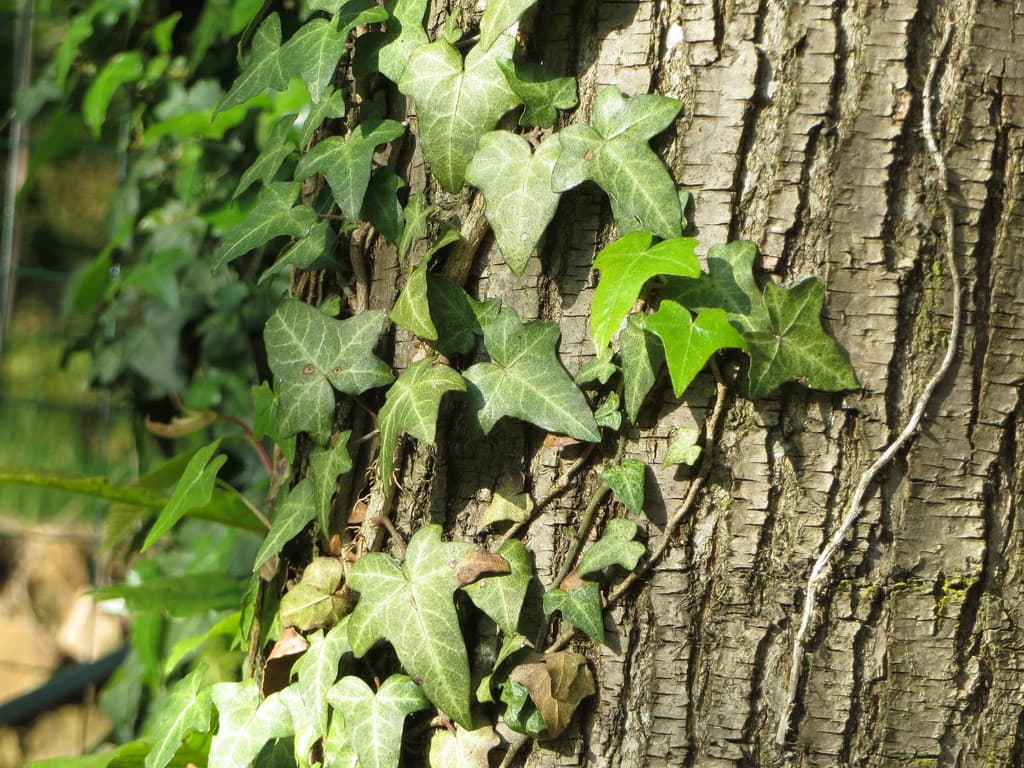
English ivy smothers trees by blocking sunlight and adding weight, increasing the risk of broken branches or tree collapse. Over time, it can kill trees and spread to nearby forests, harming native plants and wildlife.
These plants are invasive but require professional treatment. Cutting or pulling them can spread fragments and make the problem worse. Leave them alone and tell your host.
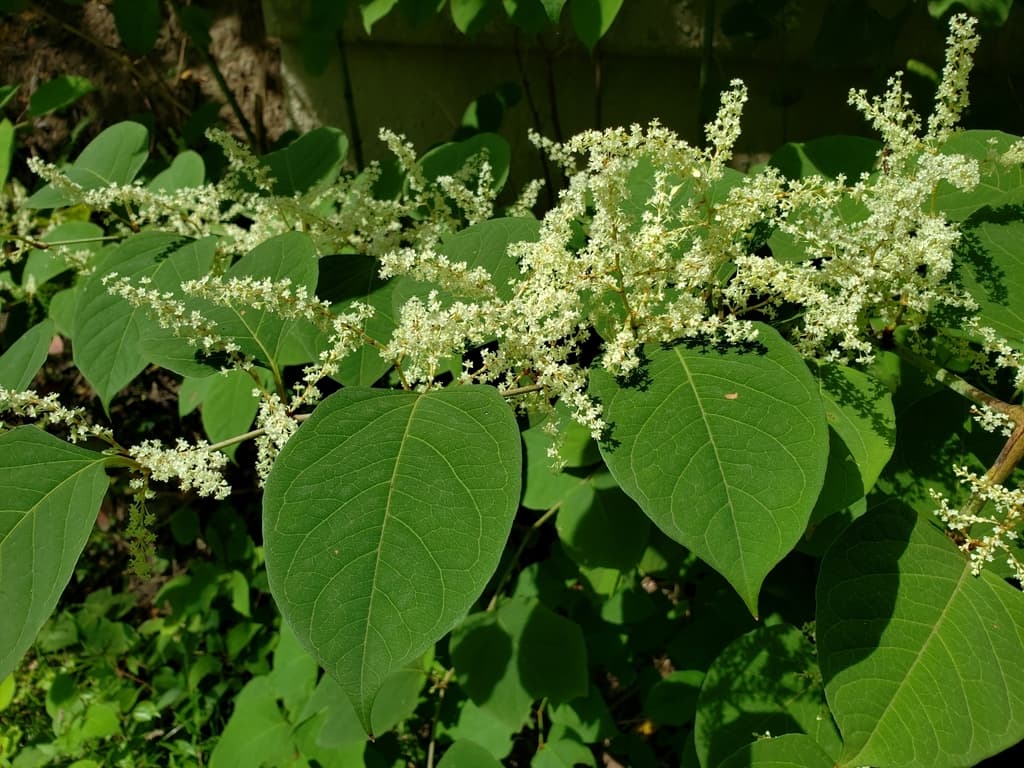
Japanese Knotweed
Fallopia japonica
DO NOT CUT
A fast-growing, bamboo-like plant with hollow stems and heart-shaped leaves. It spreads aggressively along riverbanks, trails, and disturbed areas. Extremely difficult to control — even a fragment of stem or root can establish a new colony.
Natives to protect
While removing invasive plants, please be extremely careful not to accidentally remove these native species, which play a critical role in supporting our local ecosystems.
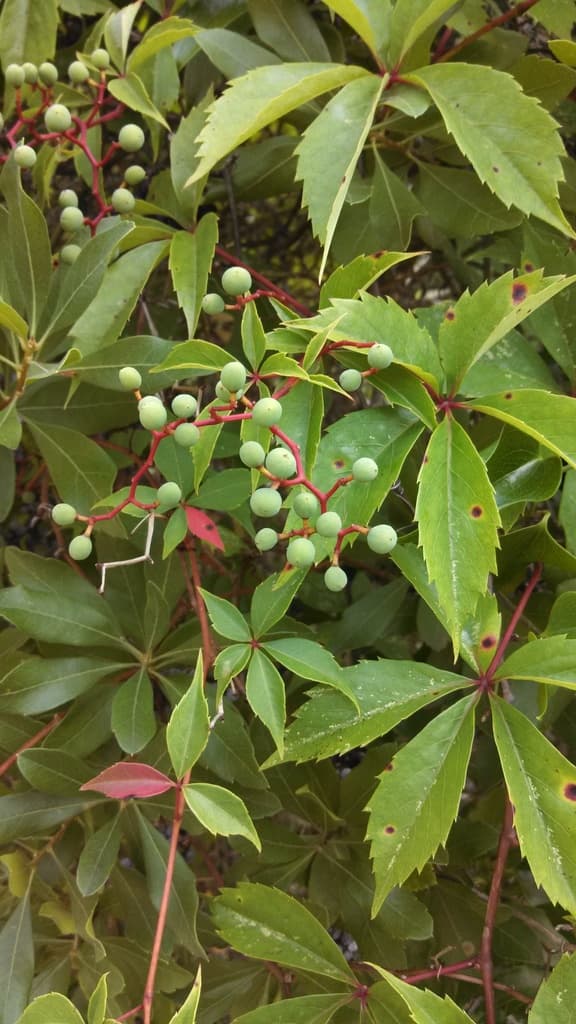
Virginia Creeper
Parthenocissus quinquefolia
Protect Native
A native vine with five leaflets. It's often mistaken for poison ivy but is harmless and beneficial for wildlife.
Identification tools
If you're ever unsure about a plant's identity, these field-tested apps can guide you:
iNaturalist Free
Community-powered app. Snap a photo and get instant suggestions, plus your observation helps track biodiversity.
Seek Free
Instant camera-based ID from iNaturalist without needing an account. Kid-friendly, private, and extremely fast.
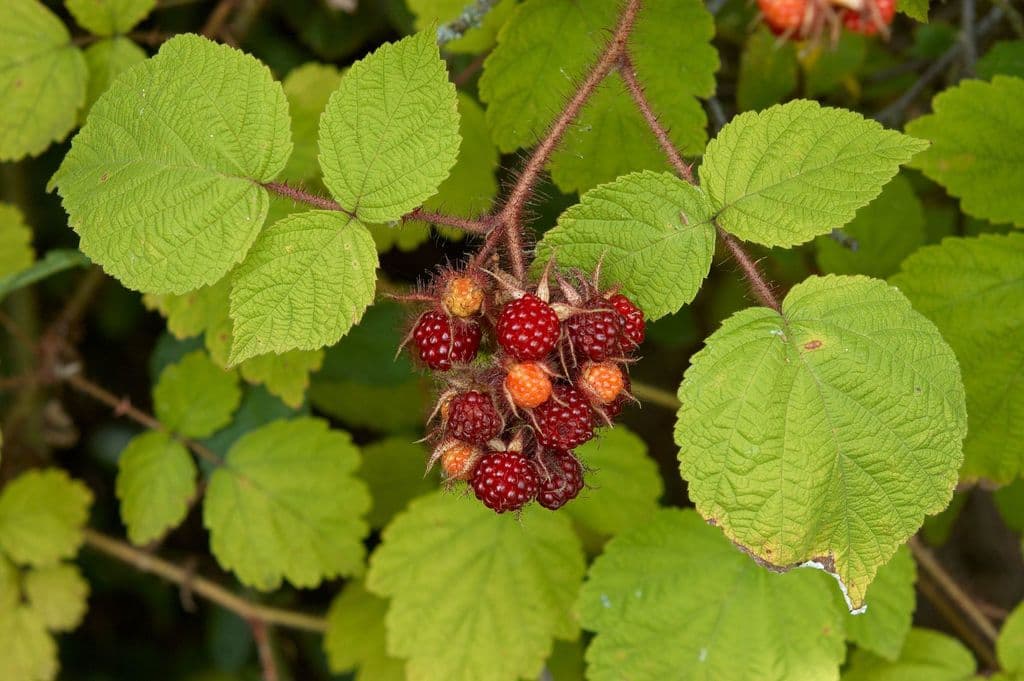
Wineberry
Rubus phoenicolasius
Invasive Focus
Wineberry is an invasive plant that spreads aggressively and displaces native species. Removing the entire root system reduces regrowth and protects native habitats.
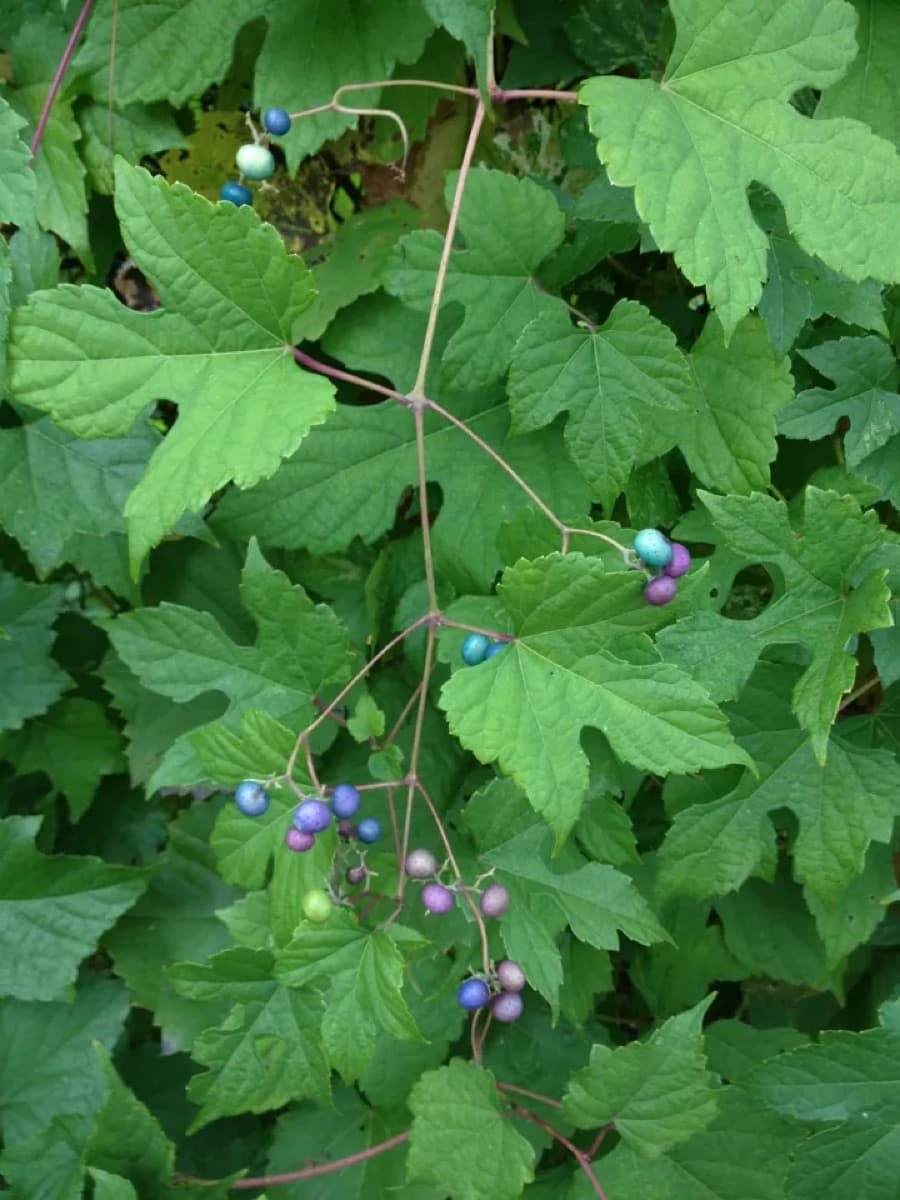
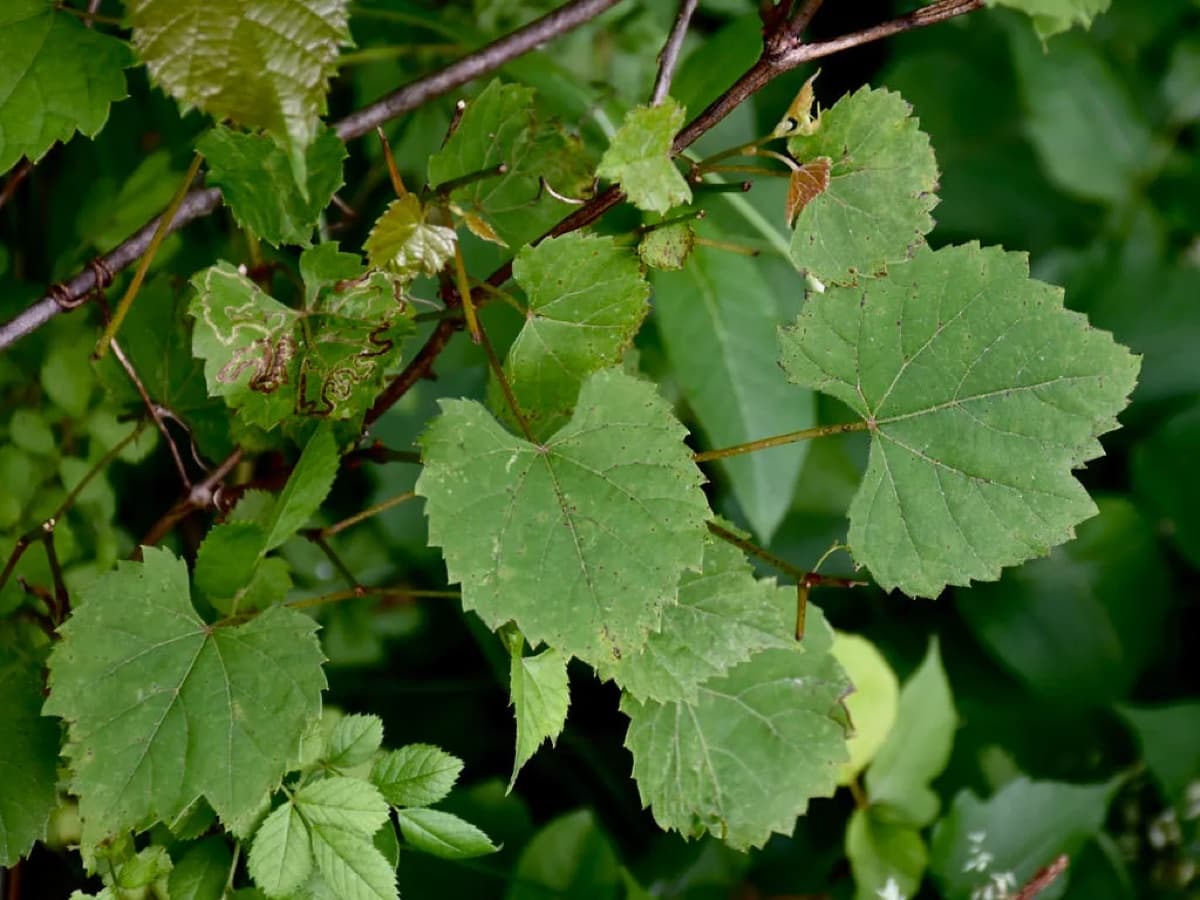
A fast-growing vine that looks like native grape but causes serious harm by smothering trees and native plants. It produces brightly colored berries that range from turquoise to deep purple, a key giveaway.
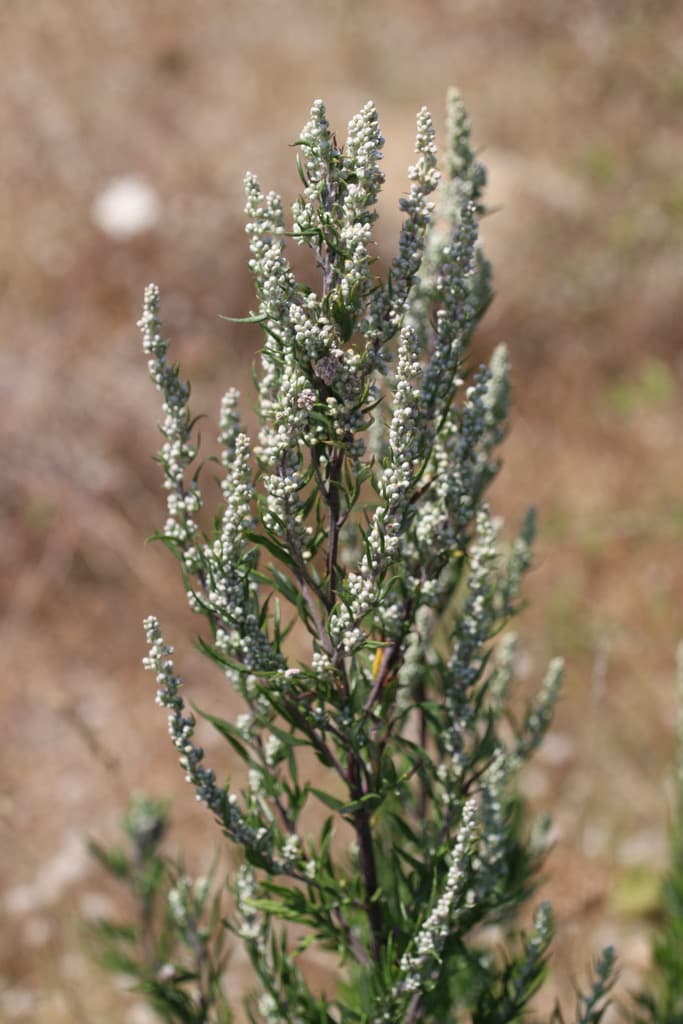
Tall, bushy plant with dark green leaves on top and silvery-white undersides. Aromatic (Sage like) when crushed. It spreads aggressively underground through rhizomes (root-like runners), forming dense patches that crowd out native plants.
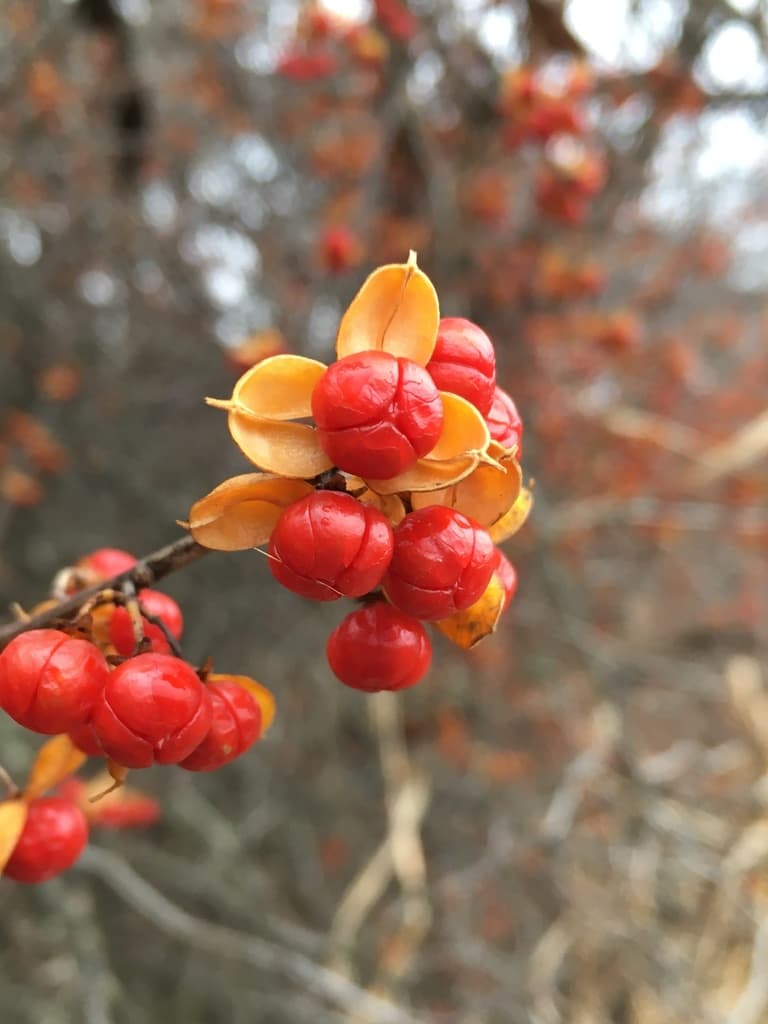
Asiatic bittersweet is a highly aggressive, invasive vine that wraps around trees and shrubs, girdling and eventually killing them. It can also climb and smother entire forest canopies, displacing native plants and harming wildlife habitats.
A nonnative perennial vine that grows aggressively, climbing over trees, fences, and other plants. It spreads quickly along the ground and can form thick, tangled mats that smother native plants. Vines can grow up to 20 feet long.
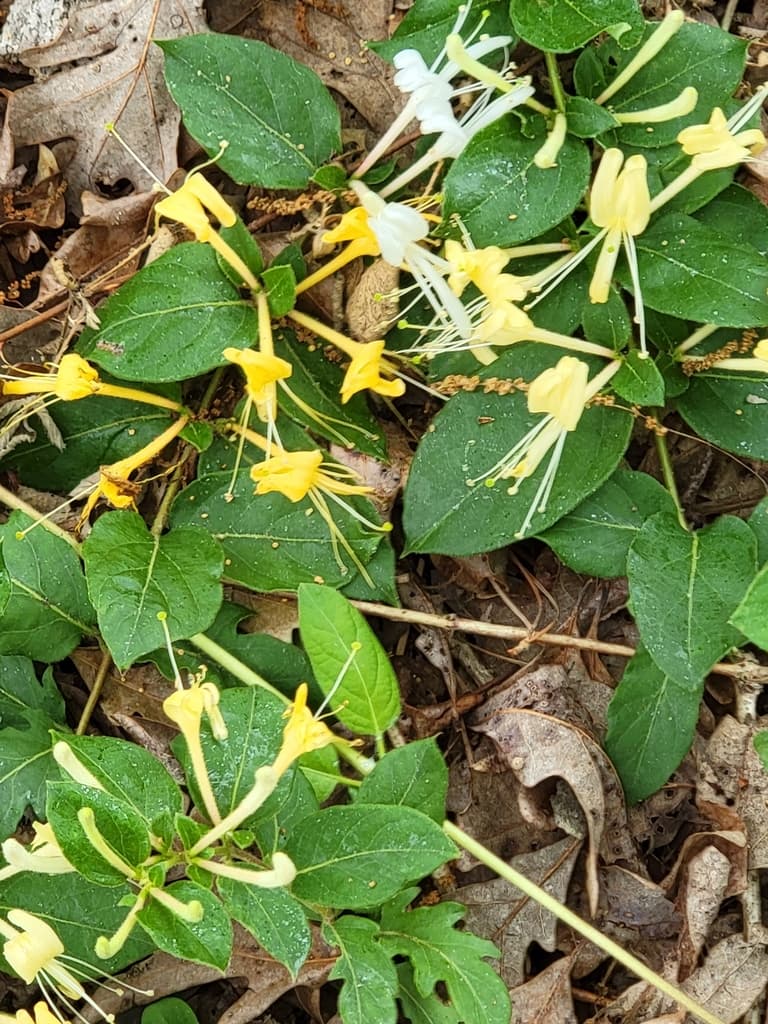
A twining, semi-evergreen vine with paired oval leaves and sweetly scented white flowers that fade to yellow. It carpets the ground and climbs shrubs and small trees, staying green well into winter after natives have dropped their leaves.
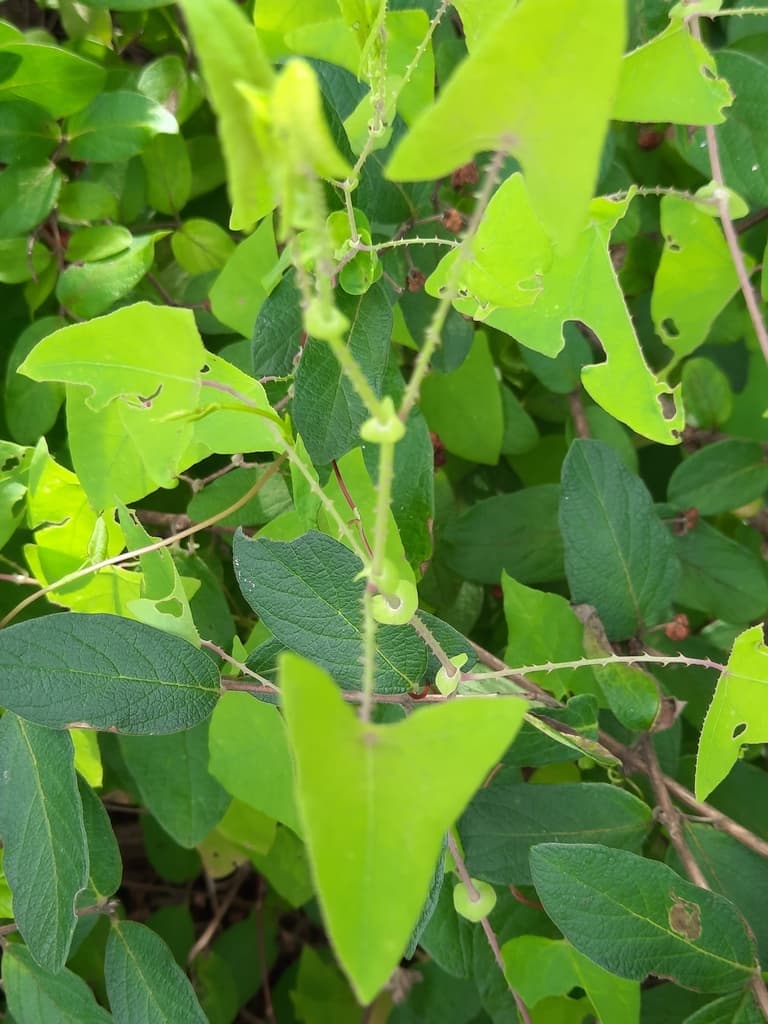
A fast-growing annual vine with neat triangular leaves, barbed stems, and a small cup-shaped collar where each leaf meets the stem. It can grow six inches a day and forms dense mats over shrubs, streambanks and clearings.
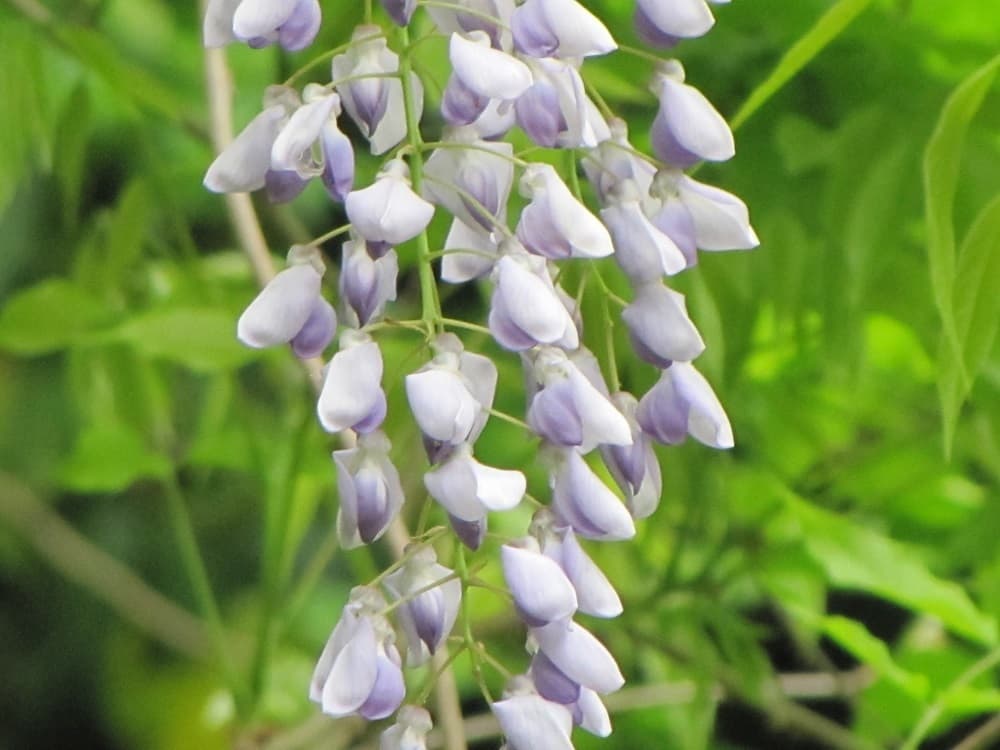
A heavy woody vine with compound leaves and hanging clusters of fragrant purple flowers in spring. Escaped from gardens it climbs and strangles trees, its stems thickening into trunks that can pull down a canopy.
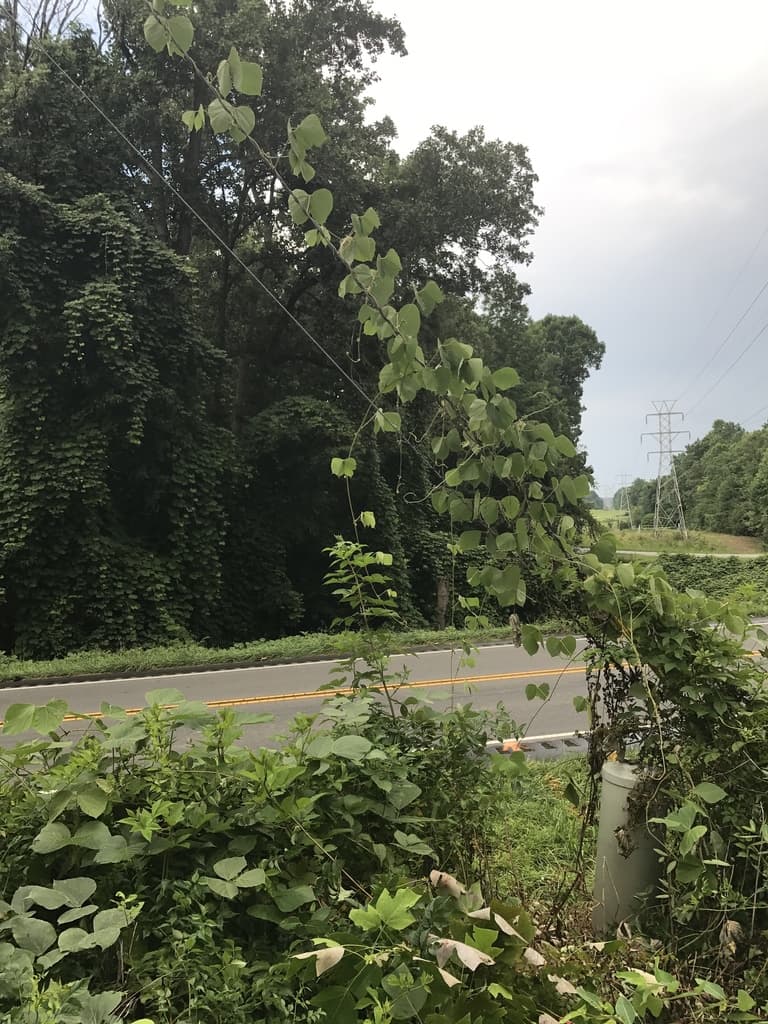
The vine that ate the South, now well established in Baltimore. Large three-part leaves on hairy stems that can grow a foot a day, draping trees, poles and buildings in a solid green blanket.
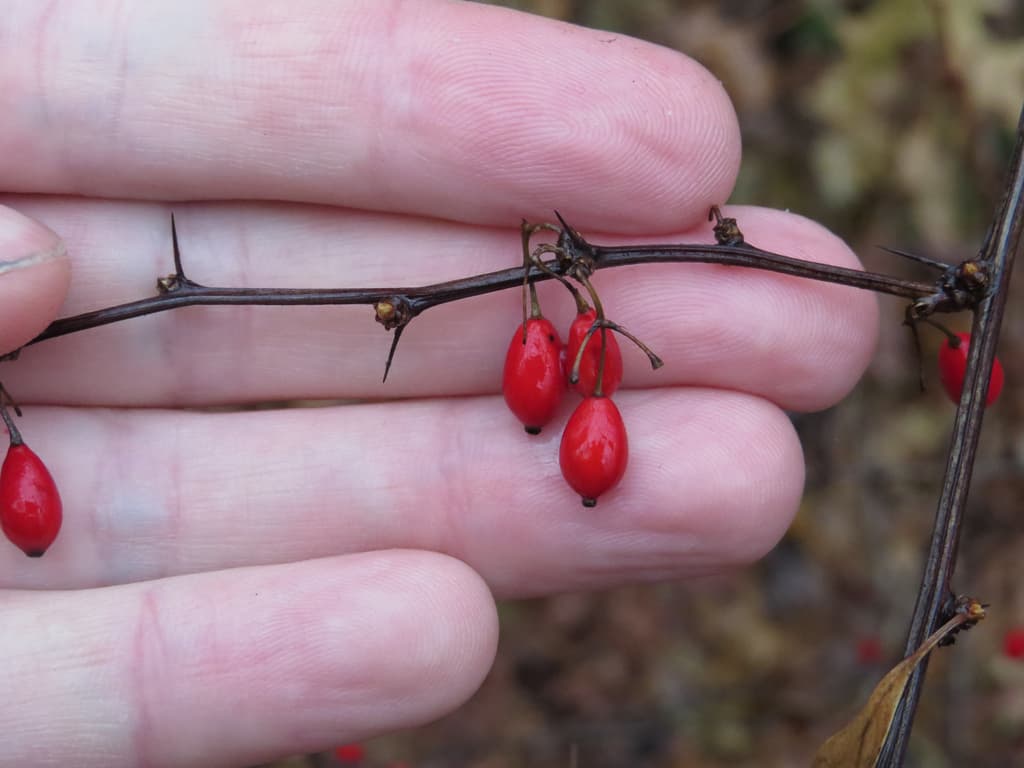
A dense, thorny shrub with small oval leaves, single sharp spines at each node, and bright red berries that hang on all winter. Escaped from foundation plantings into the forest understory, where it forms thickets that shelter black-legged ticks.
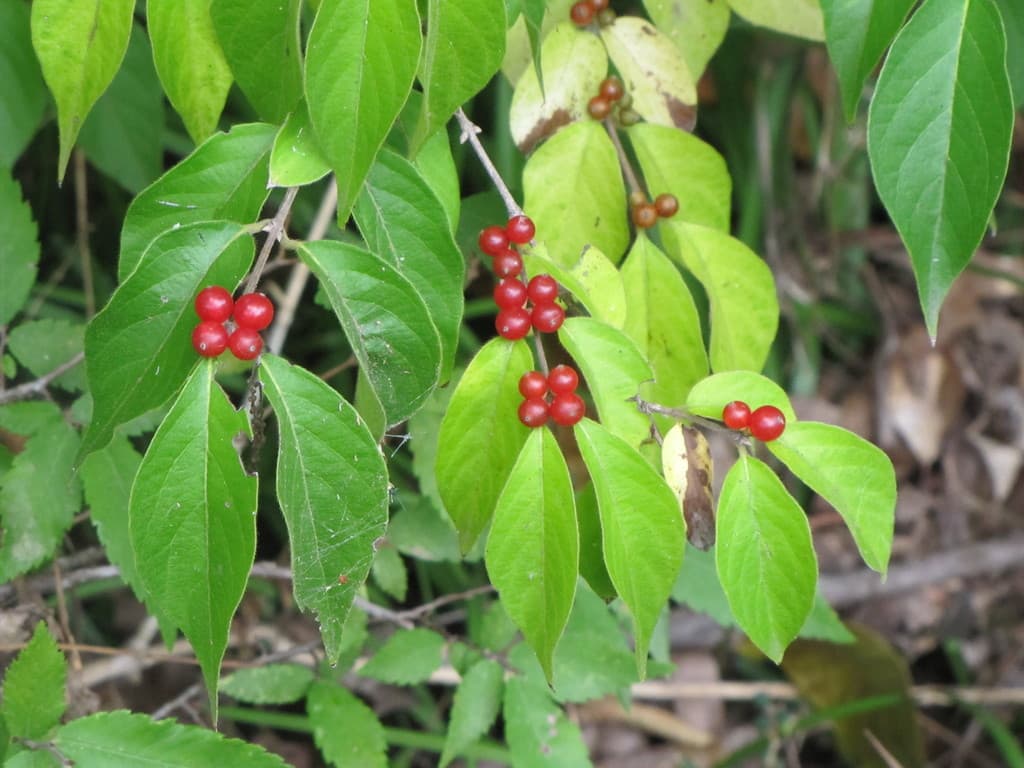
Several closely related Asian shrubs: upright, multi-stemmed, with paired oval leaves, paired tubular flowers and red or orange berries. They leaf out early and hold leaves late, shading the forest floor for weeks longer than natives.
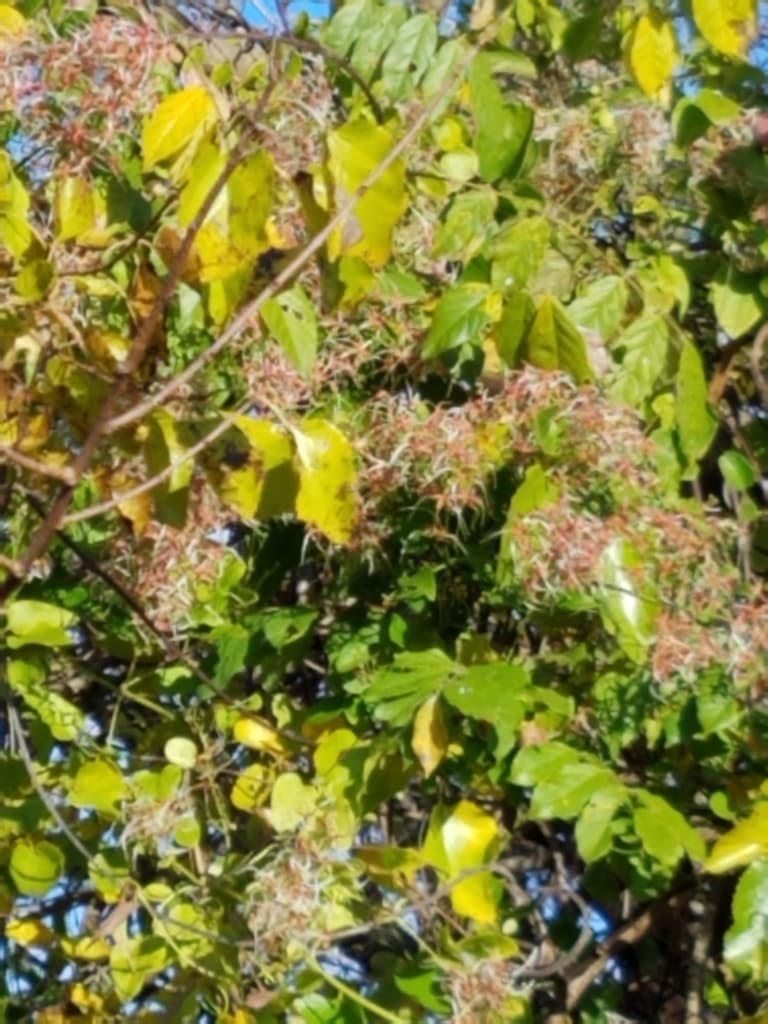
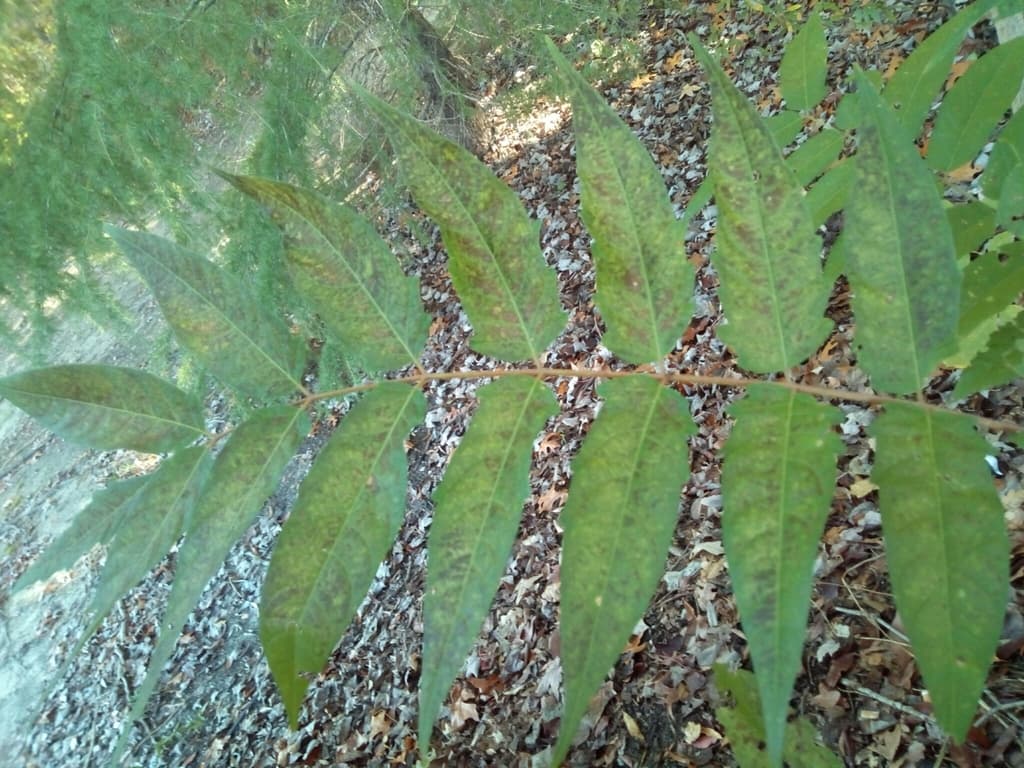
A fast-growing tree with long compound leaves that smell of burnt peanut butter when crushed, smooth grey bark, and clusters of papery seeds. It is the preferred host of the spotted lanternfly. Seedlings and suckers are pulled, small to mid-size stems come out with a weed wrench, and anything larger is reported for chemical treatment rather than cut.
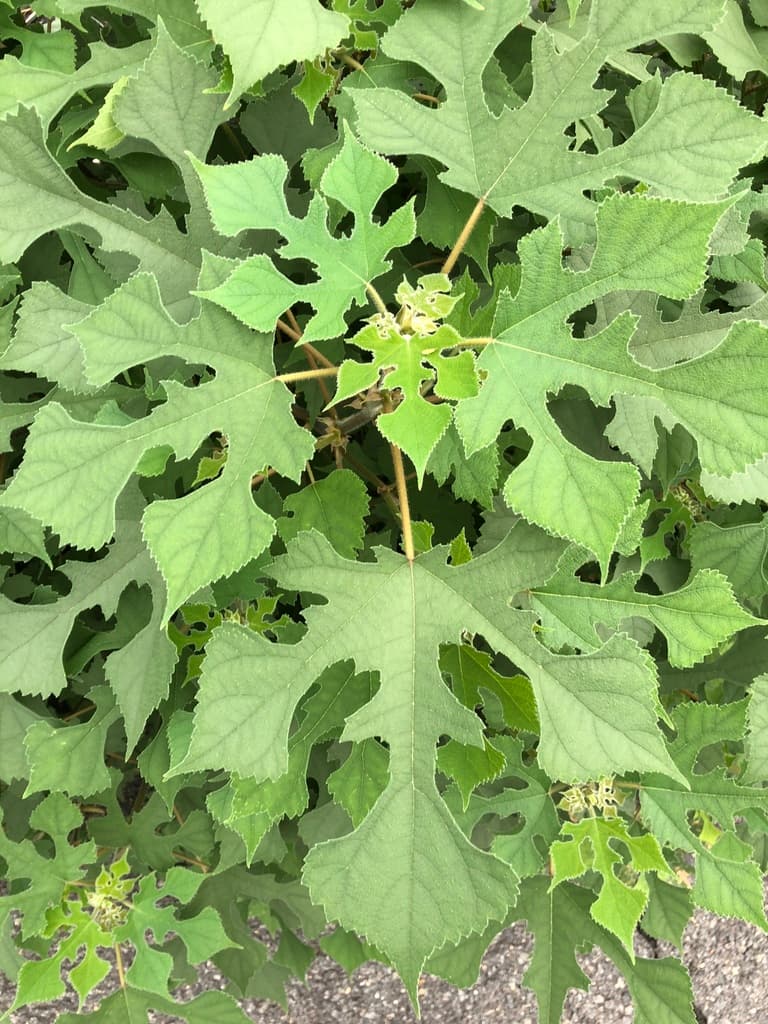
A small tree with fuzzy, variably lobed leaves (mitten-shaped, three-lobed and unlobed on the same branch), grey-tan blotchy bark, and orange-red ball-shaped fruit. It spreads by root suckers into dense clonal thickets along edges and disturbed ground.
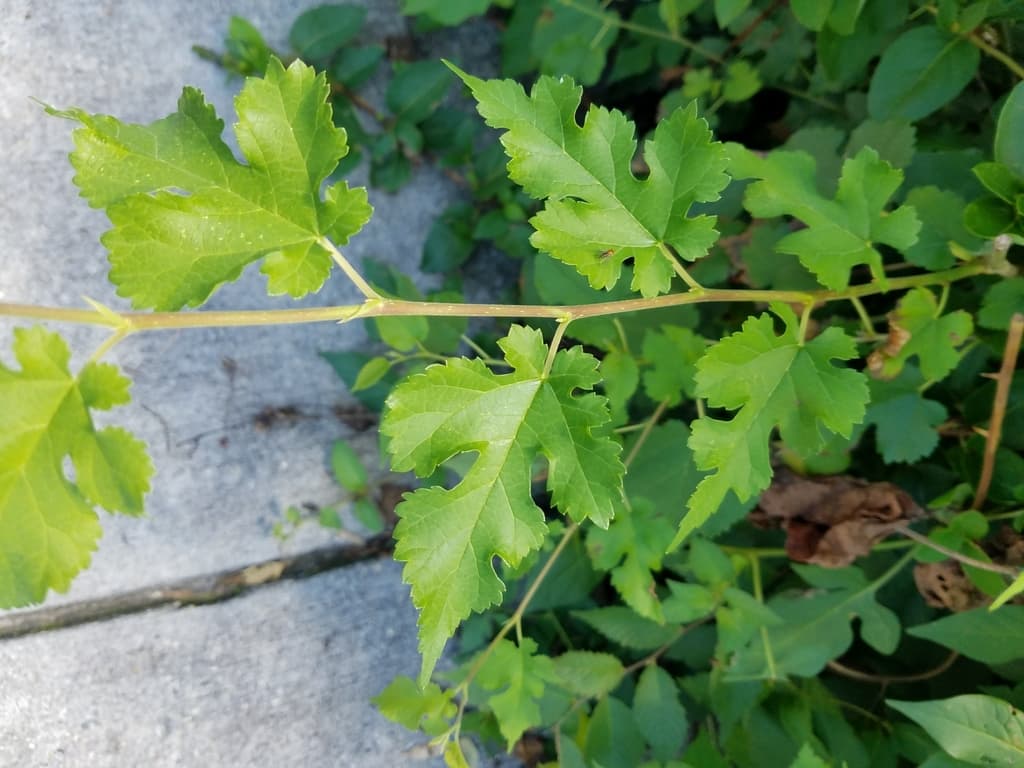
A medium tree with glossy, smooth-topped leaves in a mix of lobed and unlobed shapes, and sweet fruit that ranges from white to pink to dark purple. It hybridises with and outcompetes our native red mulberry.
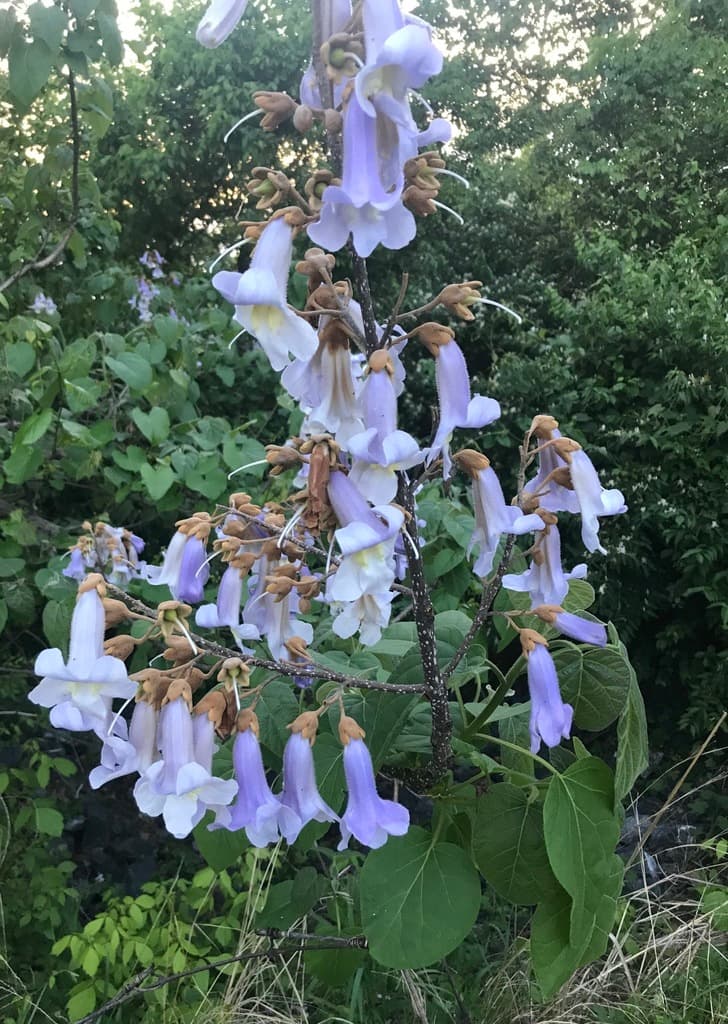
A fast-growing tree with enormous heart-shaped, velvety leaves, showy purple trumpet flowers before the leaves in April, and woody seed capsules that hang on all winter. Each capsule holds thousands of tiny winged seeds.
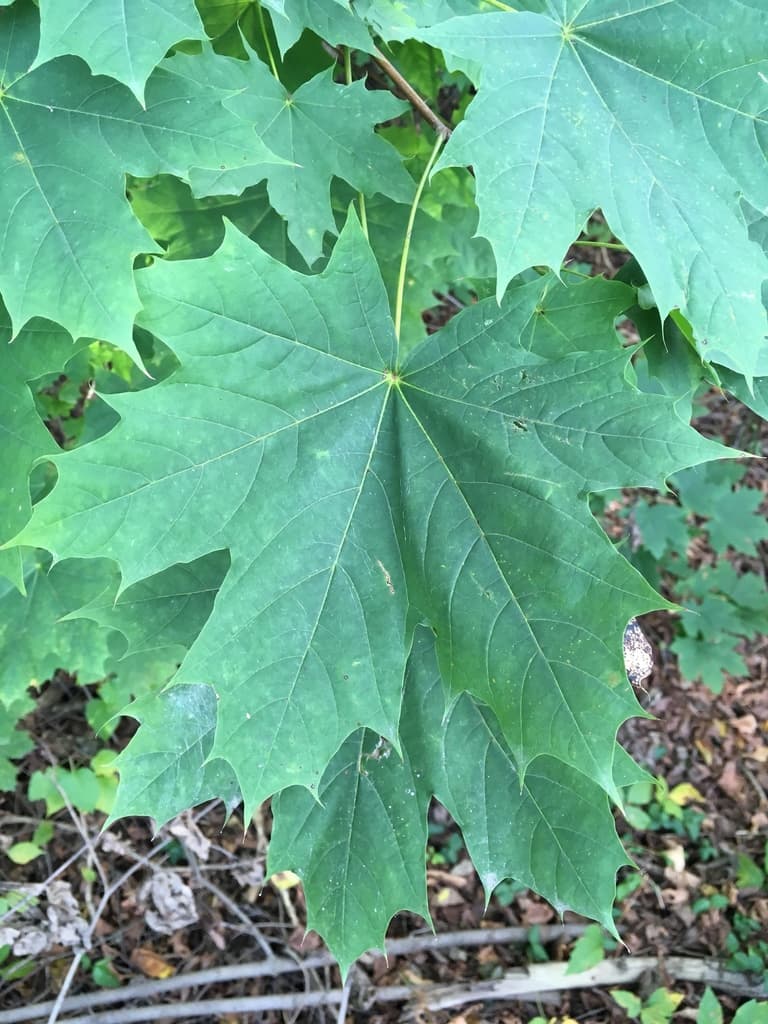
A common street tree that seeds itself into every nearby woodland. Broad five- to seven-lobed leaves, milky sap in the leaf stalk, and a canopy so dense that nothing grows beneath it. Carpets of its seedlings crowd out native maples and oaks.
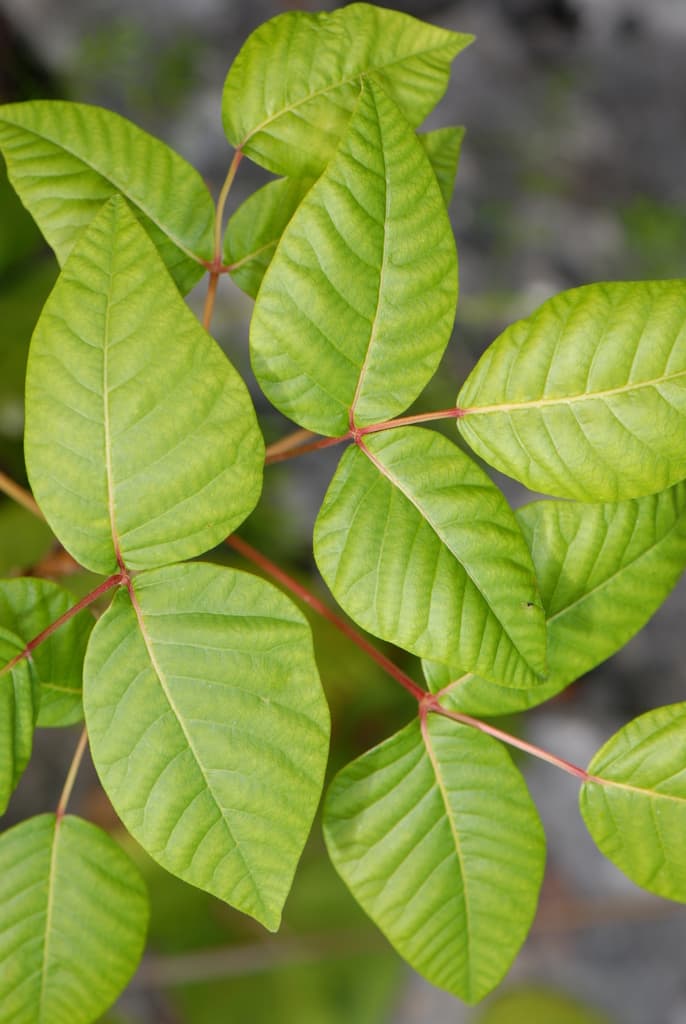
A native vine with three leaflets (leading to the saying "leaves of three, let it be"). The stalk of the middle leaflet is much longer than the stalks of the two side leaflets. While it causes skin irritation, poison ivy is native and its white berries provides food for birds. Avoid removing it unless it poses a safety hazard, removal requires extensive protection.