🔴 Invasive - Remove
Wineberry
Rubus phoenicolasius
This is an invasive species that harms native ecosystems. It should be removed when found to protect local plant and wildlife habitats.
Rubus phoenicolasius
This is an invasive species that harms native ecosystems. It should be removed when found to protect local plant and wildlife habitats.
Wineberry is an invasive plant that spreads aggressively and displaces native species. Removing the entire root system reduces regrowth and protects native habitats.
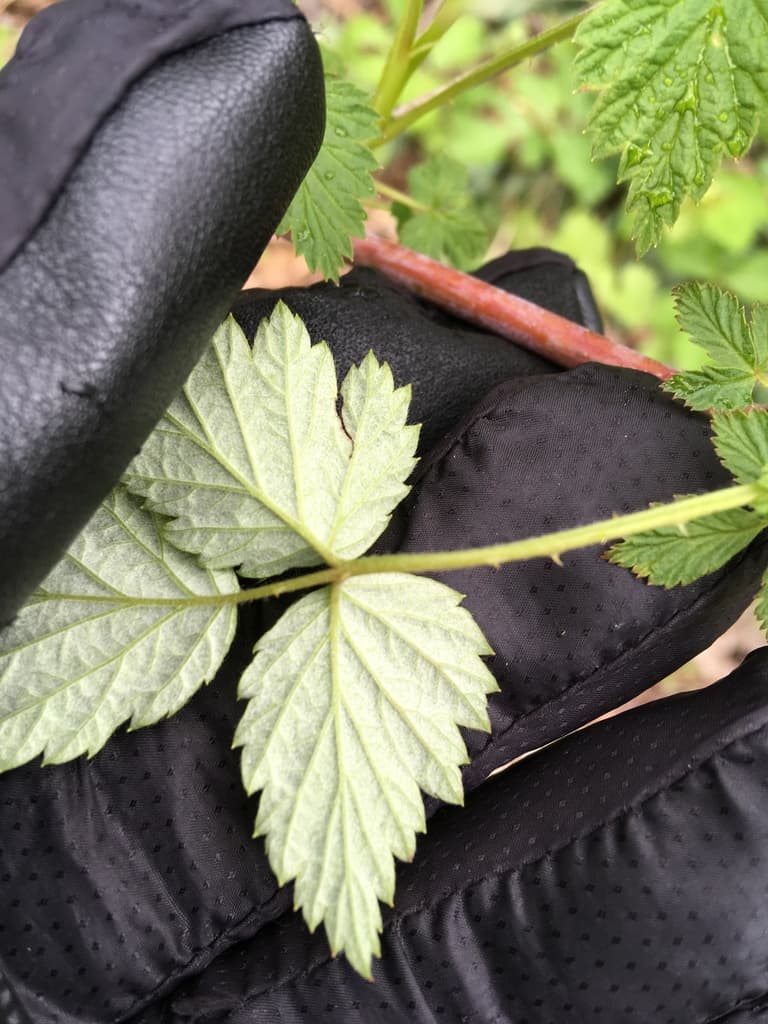
Colour and texture: Green above, bright white-felted underneath: flip a leaf and it looks dusted with flour. The canes are the other giveaway: covered in fine red hairs, like a raspberry cane wearing fur.
Fruit late June–July.
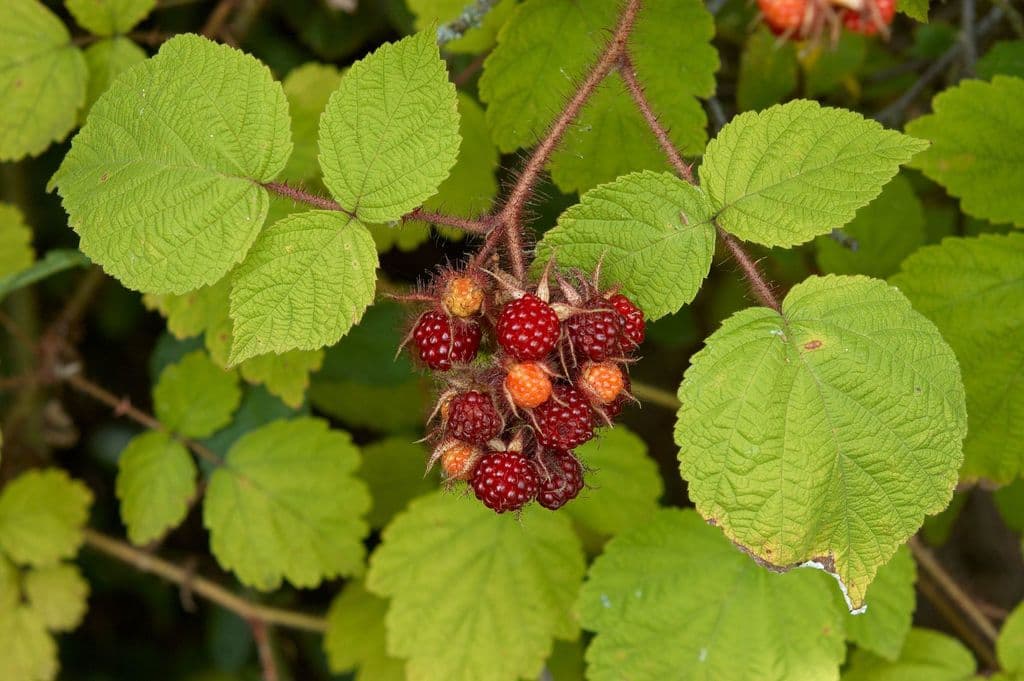
Bright red-orange raspberries, each sitting in a sticky, hairy green cup that folds back as the berry ripens.
Why it matters: Birds and people both spread it. In fruiting weeks either bag the fruiting canes first or come back later. Dragging a fruiting cane across the site plants it.
A woody crown too big to pull and too stubborn to cut: wineberry, multiflora rose, barberry, bush honeysuckle, tree seedlings.
Avoid: Do not clamp halfway up the stem. It snaps, and the crown stays in the ground and re-sprouts.
Any plant carrying ripe seed or fruit. Once you start dragging it, you are sowing it.
It can stay on site. Canes and wrenched crowns can stay. Pile them off the soil, roots up, so the crowns dry instead of re-rooting.
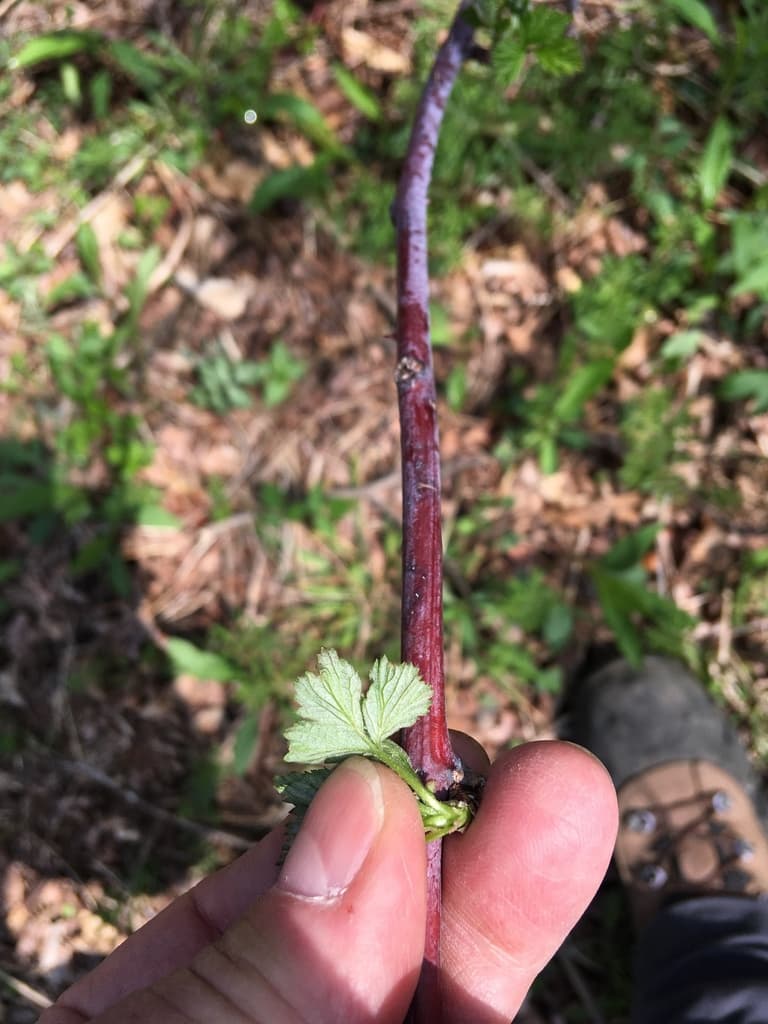
Both are bramble canes with three leaflets that are white underneath, both arch over and root where the tip touches the ground, and both grow in the same edges. The leaf will not tell you them apart, but the cane will, at a glance, from several feet away.
Black Raspberry
Rubus occidentalis
Native: keepSmooth purple cane under a waxy blue-white bloom.
Avoid: Do not carry a fruiting plant across the site to a pile. That walk is how the next patch gets planted.
Before the first cut: Small plants pull by hand once the canes are cut; big ones need the wrench or the crown will re-sprout.
Thorns: wear and long sleeves. Small plants pull most easily after rain, when the soil lets go; anything bigger goes to the .
Next time: look for re-sprouts where you worked and pull them while they are small.
Wineberry
Rubus phoenicolasius
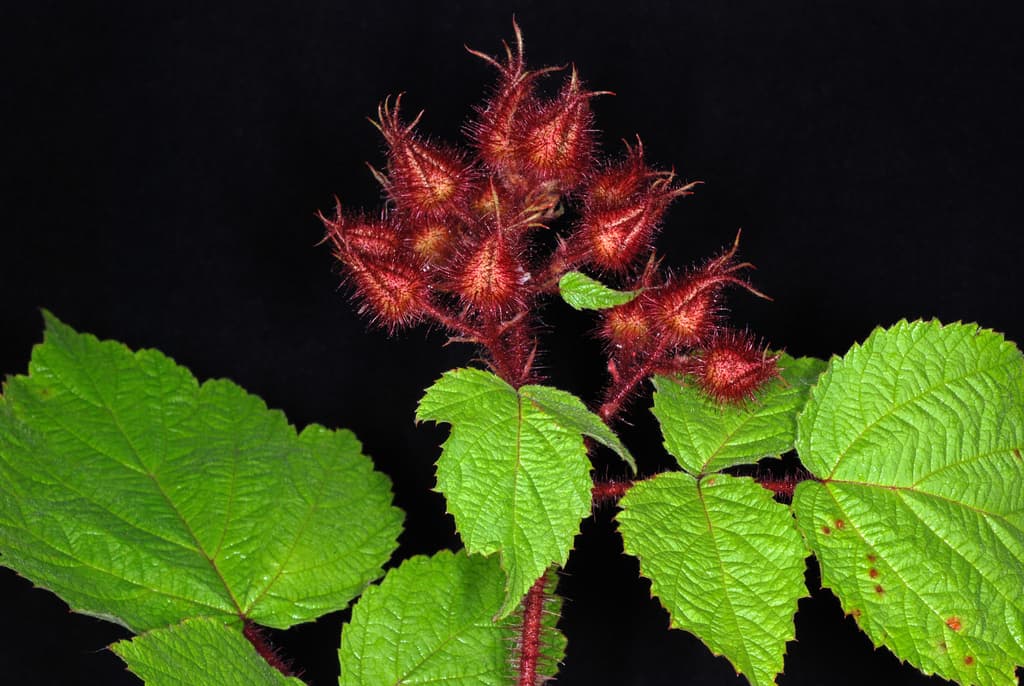
Canes and fruit cups furred in red bristles.
Black Raspberry
Smooth, and coated in a waxy blue-white bloom you can rub off with a thumb, over a purple stem. Armed with stout, hooked thorns, but no hairs.
Wineberry
Densely furred in fine red-purple hairs and bristles, from the base to the tips. It looks and feels like a red-haired cane, and it glows red with the sun behind it.
Black Raspberry
Three on fruiting canes, often five on this year’s new growth. White-felted underneath.
Wineberry
Three, the end one much the largest. Also white-felted underneath, so this is not the check.
Black Raspberry
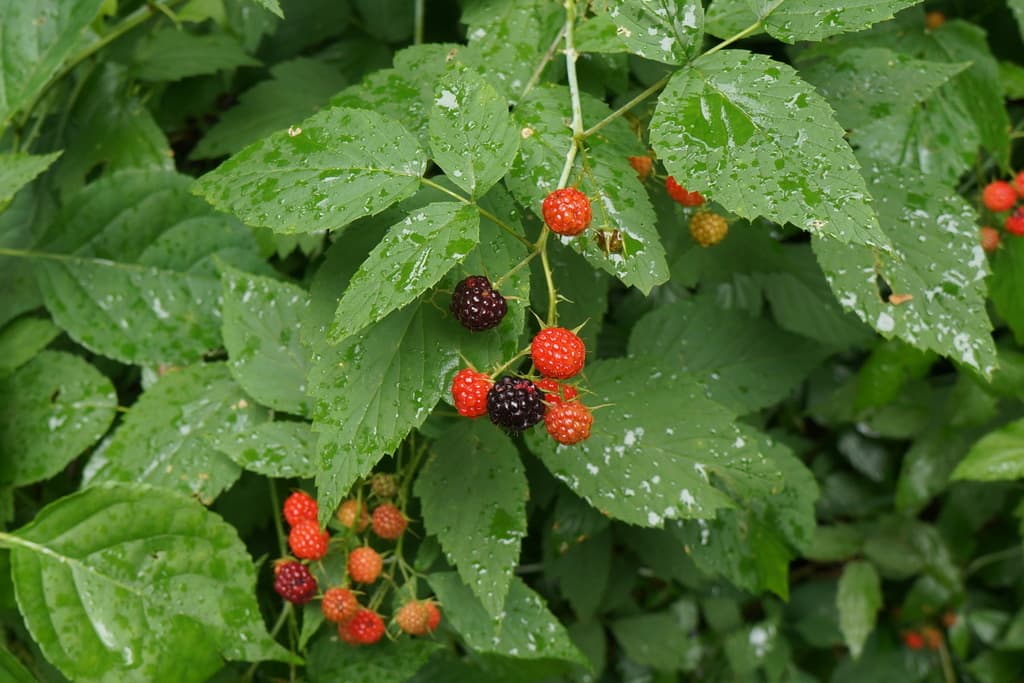
Deep purple-black, ripe late June into July, and hollow like a thimble when you pick it.
Wineberry
Bright red-orange, ripening a little later, each berry held inside a sticky green cup covered in red bristles until it opens.
Black Raspberry
Sits open on the cane as a small green then red knob.
Wineberry
Stays shut inside that hairy calyx, so before it ripens a wineberry looks like a cluster of spiky red buds and nothing like a berry.
When in doubt, leave the plant and ask a site lead before removing it.