🔴 Invasive - Remove
White Mulberry
Morus alba
This is an invasive species that harms native ecosystems. It should be removed when found to protect local plant and wildlife habitats.
Morus alba
This is an invasive species that harms native ecosystems. It should be removed when found to protect local plant and wildlife habitats.
A medium tree with glossy, smooth-topped leaves in a mix of lobed and unlobed shapes, and sweet fruit that ranges from white to pink to dark purple. It hybridises with and outcompetes our native red mulberry.
Native to: China
Planted across the colonies in the 1600s and 1700s in repeated attempts to start a silk industry — it is the silkworm’s food plant. The silk failed; the trees stayed.
Invades edges, fencerows and floodplains, and crosses with native red mulberry so readily that pure red mulberry is becoming hard to find. It also carries a root disease that harms the native.
Colour and texture: Glossy and smooth to the thumb, variable from plain oval to deeply lobed on the same tree. Native red mulberry is rough like sandpaper on top and dull, so run your thumb over the leaf before every cut.
Leaves: alternate, 2–7 inches, glossy and smooth on top (run a thumb across it), lobed and unlobed on the same tree, with a rounded base.
Twigs: slender, orange-brown, with milky sap.
Bark: orange-tinged, furrowed on older trees.
Fruit: blackberry-like, white, pink or purple, ripening May–June — messy and popular with birds.
Fruit June–July.
Blackberry-shaped fruit ripening white to pink to purple, on a short stalk.
Why it matters: It hybridises with and displaces our native red mulberry, so telling the two apart is the whole job here, and a stained pavement is usually how you find the tree.
A woody crown too big to pull and too stubborn to cut: wineberry, multiflora rose, barberry, bush honeysuckle, tree seedlings.
Avoid: Do not clamp halfway up the stem. It snaps, and the crown stays in the ground and re-sprouts.
It can stay on site. Pulled saplings can stay, piled off the soil with the roots up.
Red mulberry is a native tree in trouble. White mulberry displaces it and hybridises with it, so telling them apart is most of the job here. Both have wildly variable leaves, plain on one branch and deeply lobed on the next, so leaf shape tells you nothing. Texture does.
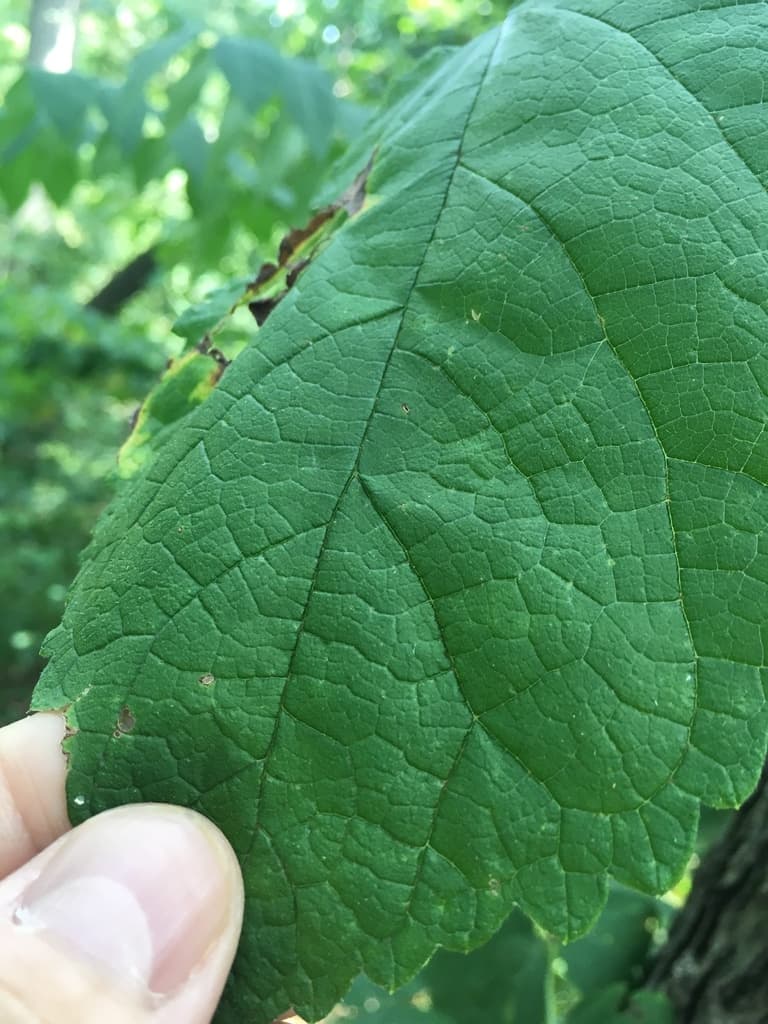
Red Mulberry
Morus rubra
Native: keepDull, deeply veined, rough as sandpaper.
Before the first cut: Thumb across the leaf top first: glossy and smooth is white mulberry; rough like sandpaper is native red mulberry, which stays.
Pull seedlings, wrench saplings, leave the trees.
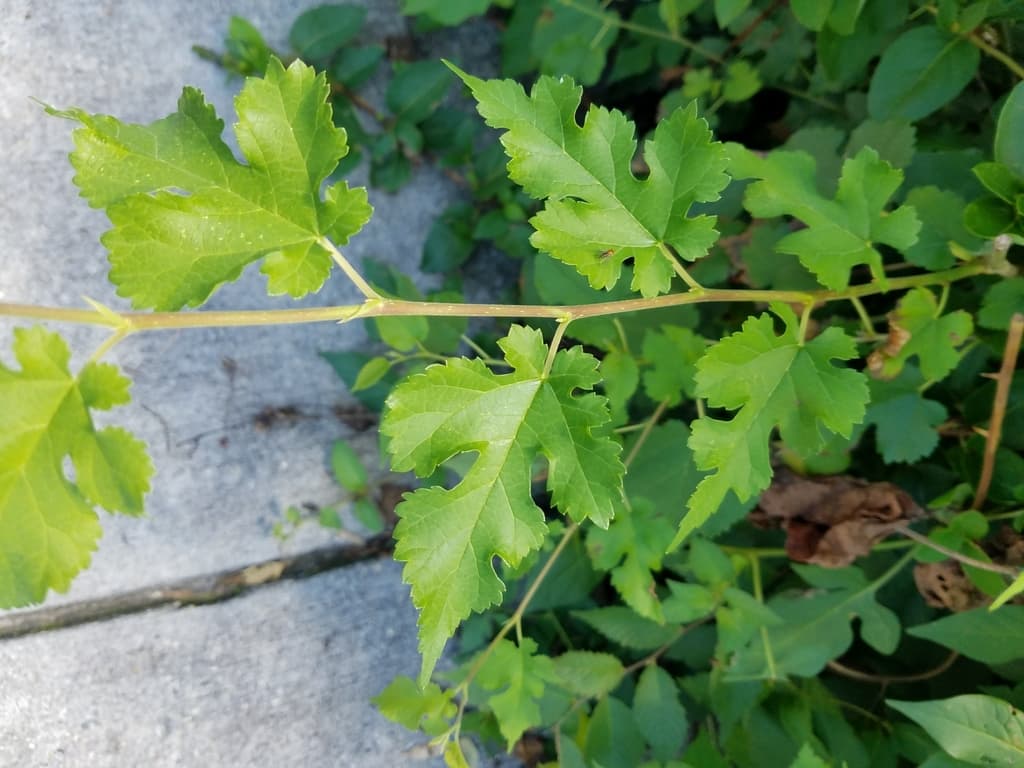
White Mulberry
Morus alba
Glossy and smooth to the thumb.
Red Mulberry
Rough, like fine sandpaper, and dull rather than shiny. The underside is softly hairy all over.
White Mulberry
Smooth and glossy, almost slick. The underside is hairless except for a few tufts where the veins meet.
Red Mulberry
Drawn out into a long, narrow point.
White Mulberry
A shorter, blunter point.
Red Mulberry
Ripens deep red to nearly black, and the tree is a heavily used bird food.
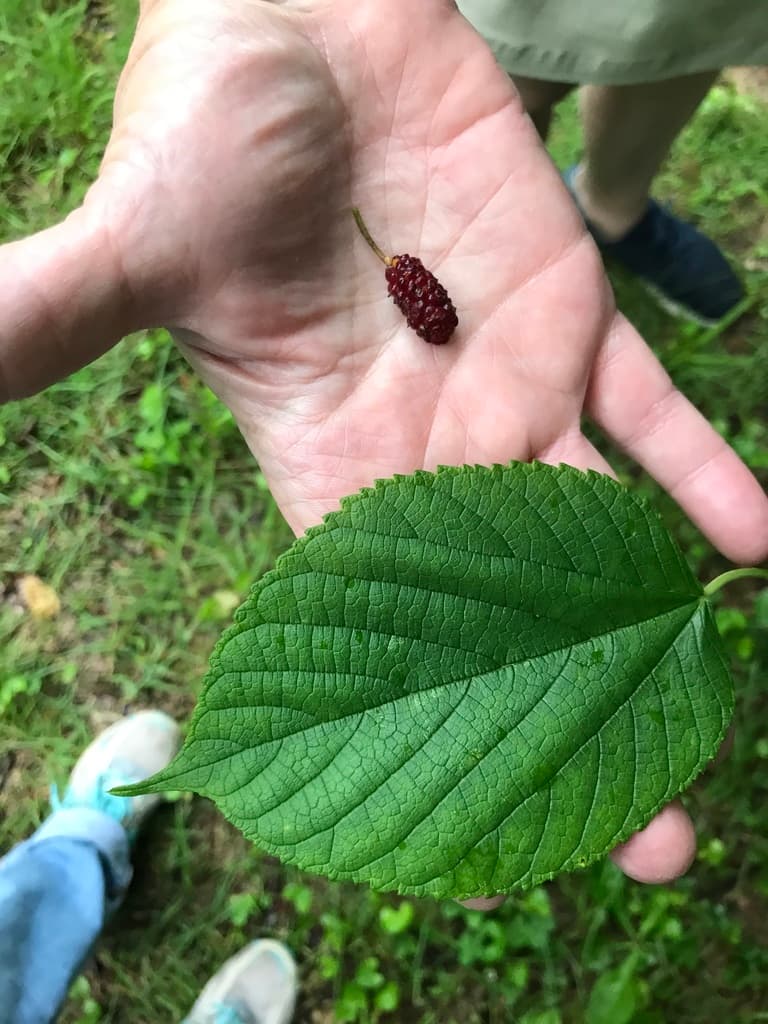
White Mulberry
Ripens white, pink or purple, often several colours on one tree, which the native never does.
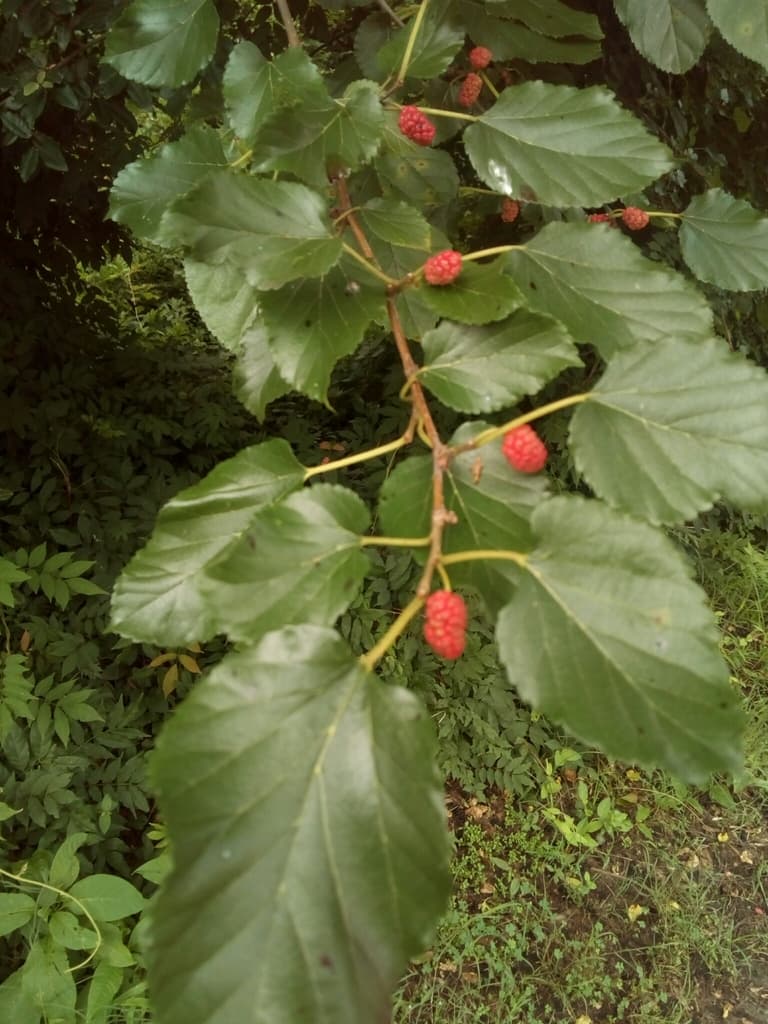
Red Mulberry
Leave it. A white mulberry left standing costs a season; a red mulberry cut down does not come back.
White Mulberry
Leave it and flag it for the site lead.
When in doubt, leave the plant and ask a site lead before removing it.