🔴 Invasive - Remove
Porcelain Berry
Ampelopsis brevipedunculata
This is an invasive species that harms native ecosystems. It should be removed when found to protect local plant and wildlife habitats.
Ampelopsis brevipedunculata
This is an invasive species that harms native ecosystems. It should be removed when found to protect local plant and wildlife habitats.
A fast-growing vine that looks like native grape but causes serious harm by smothering trees and native plants. It produces brightly colored berries that range from turquoise to deep purple, a key giveaway.
Colour and texture: Bright green and coarsely toothed, varying from barely lobed to deeply cut on the same vine. Snap a pencil-thick stem: the pith inside is bright white, where a native grape’s is tan.
Berries August–October.
Speckled berries in turquoise, lilac, pale pink and porcelain blue, often all of those colours in one upright cluster.
Why it matters: Nothing native here fruits in that colour range, so the berries are both the easiest ID of the year and the reason to get the vine out before the birds do.
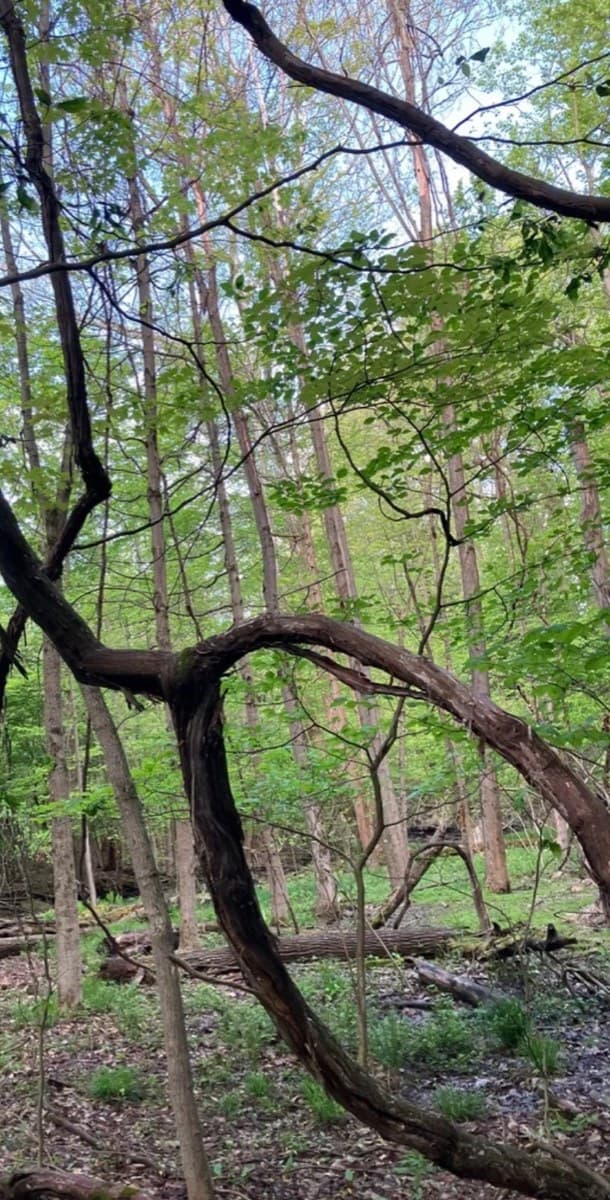
A woody vine climbing a tree. This is the safe way to free a tree: you never pull a vine down out of a canopy.
Avoid: Do not haul the vine down. It is tangled into the branches, and pulling brings down deadwood on top of you.
Any plant carrying ripe seed or fruit. Once you start dragging it, you are sowing it.
It can stay on site. Cut vine can stay on site. Pile it off the ground, because a stem lying on soil roots at the nodes.
River grape is a native vine that feeds birds and pollinators. Porcelain berry is an aggressive invasive that looks a lot like it. Because we remove porcelain berry on sight, make sure a vine fails these checks before you cut it.
Avoid: Do not carry a fruiting plant across the site to a pile. That walk is how the next patch gets planted.
Before the first cut: Pull small plants out whole if the soil is soft; it regrows from root fragments.
How to remove it:
• Cut and Pull: Cut the vine near the base and again as high as you can reach. Remove the section in between to stop regrowth through connection. If possible, remove roots as well to prevent resprouting.
• Dig out roots: Pull small plants completely if the ground is soft. Porcelain Berry can regrow from root fragments, so remove as much of the root system as possible.
• Follow up: Watch for regrowth and remove new shoots promptly.
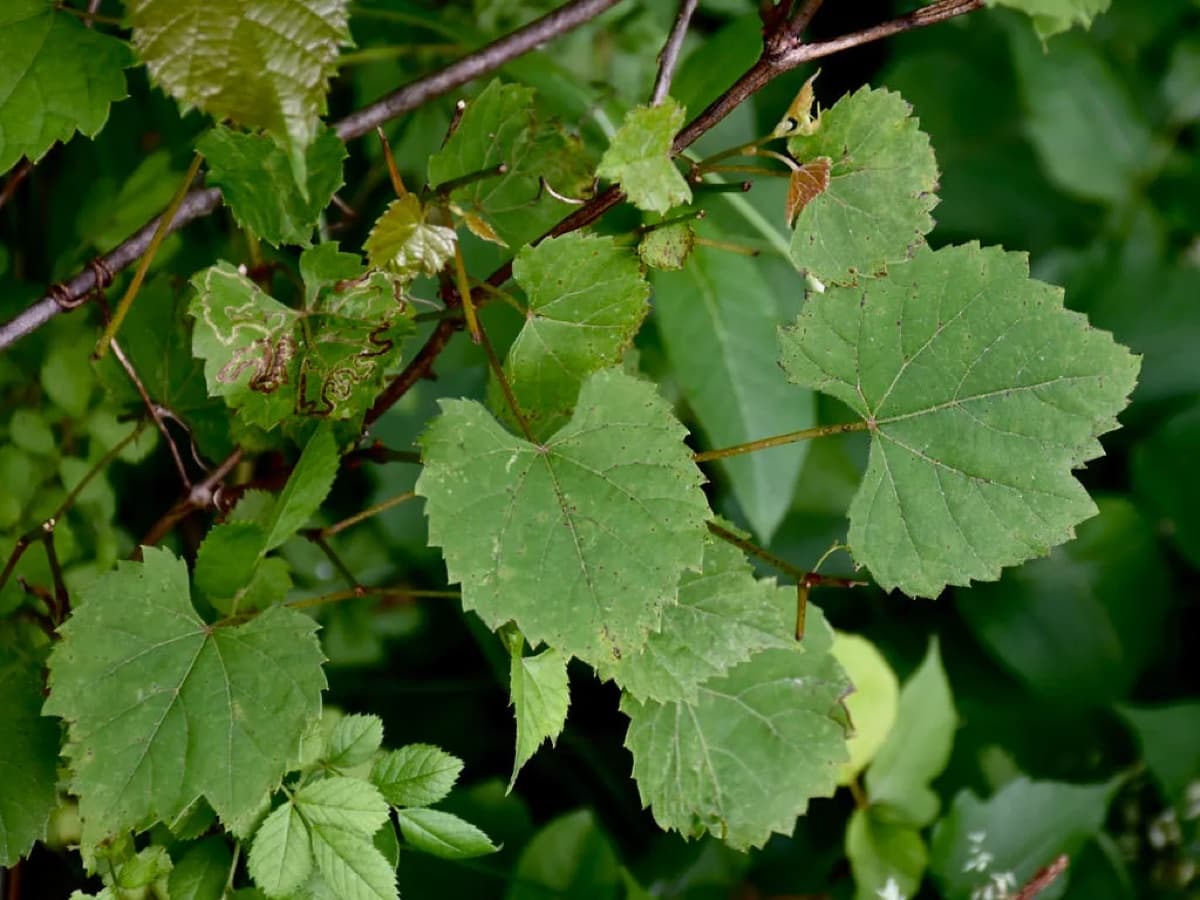
River Grape
Vitis riparia
Native: keepHeart-shaped, deep notch at the base, fuzzy underneath.
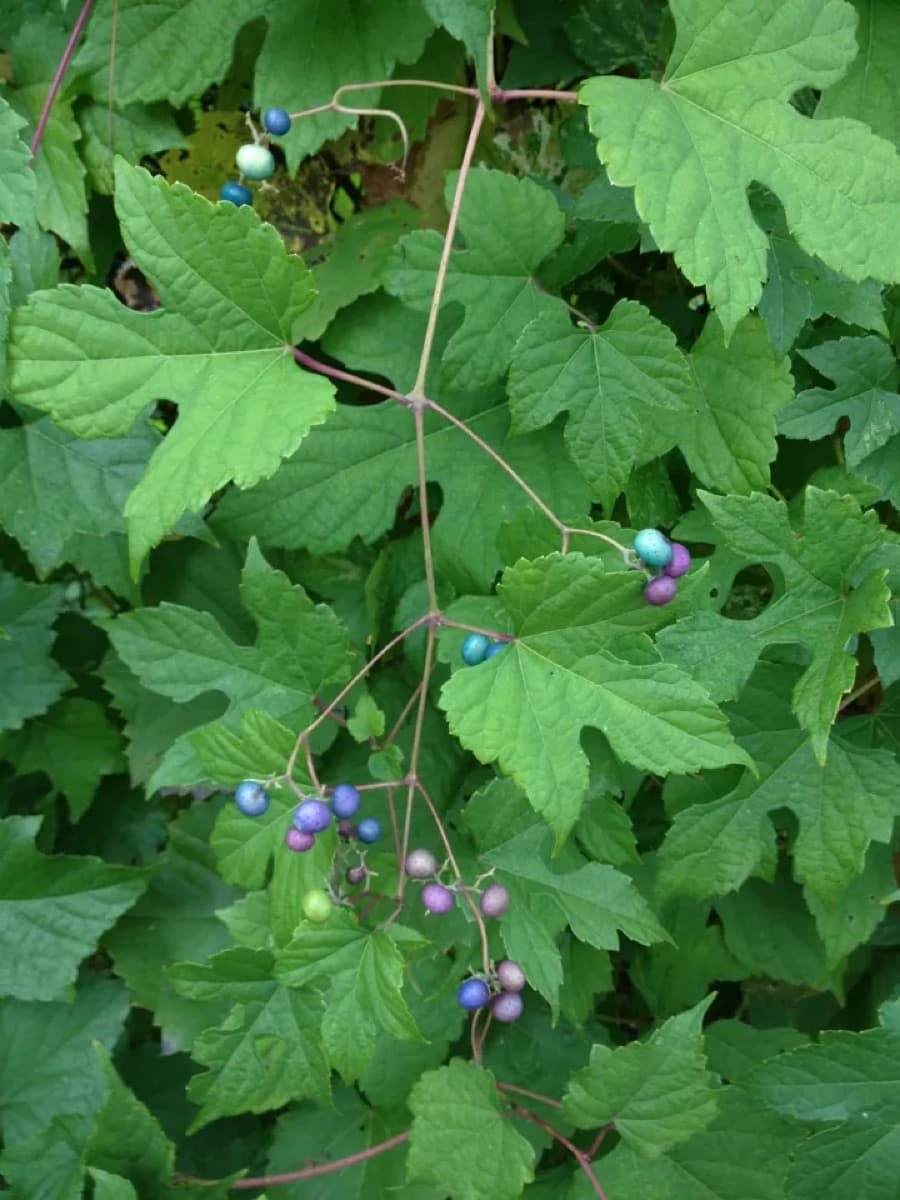
Porcelain Berry
Ampelopsis brevipedunculata
Invasive: removeSpeckled turquoise and lilac berries. Nothing native fruits like this.
River Grape
Shaggy: mature vines peel in loose, papery strips. Young stems are smooth and reddish-brown, but they never show white dots.
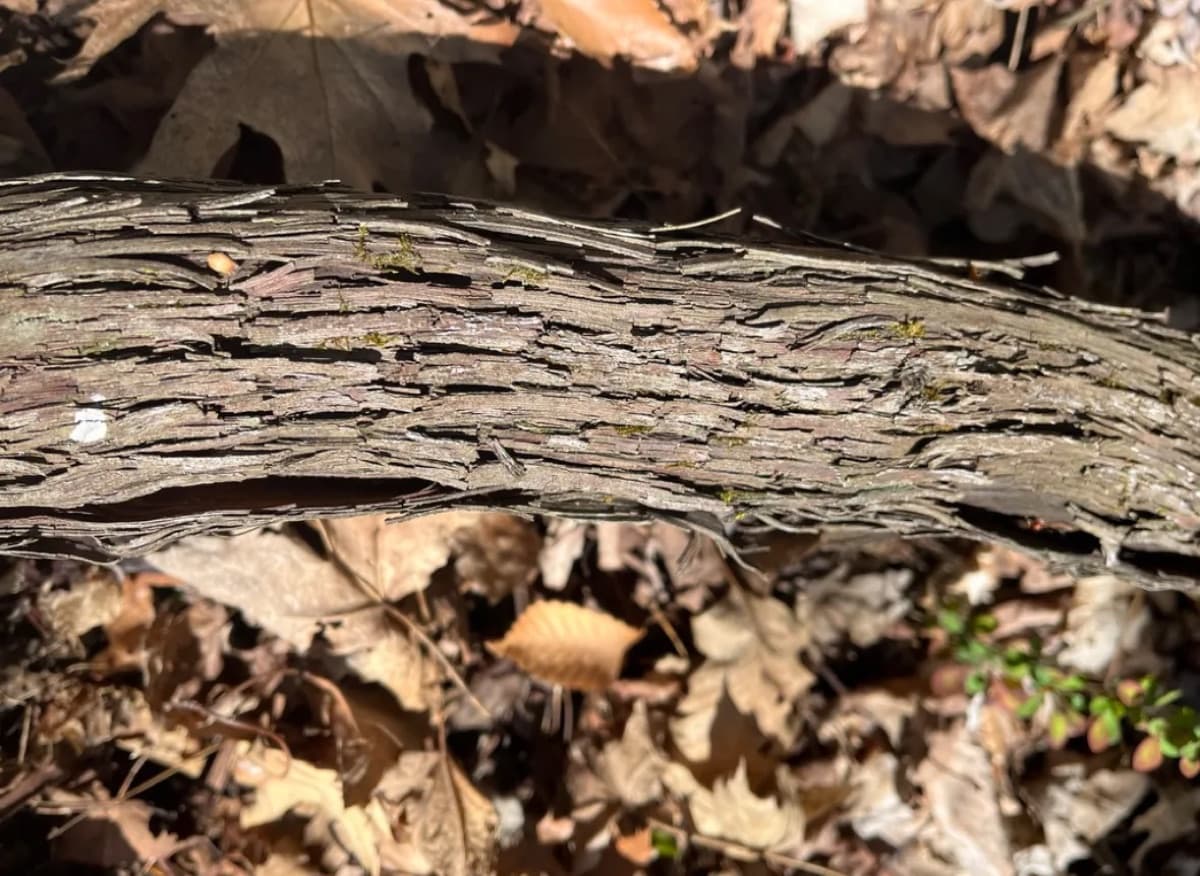
Porcelain Berry
Never peels. Young stems are smooth with raised white dots (lenticels); older bark grows dull and ridged but stays intact, with no shaggy strips.
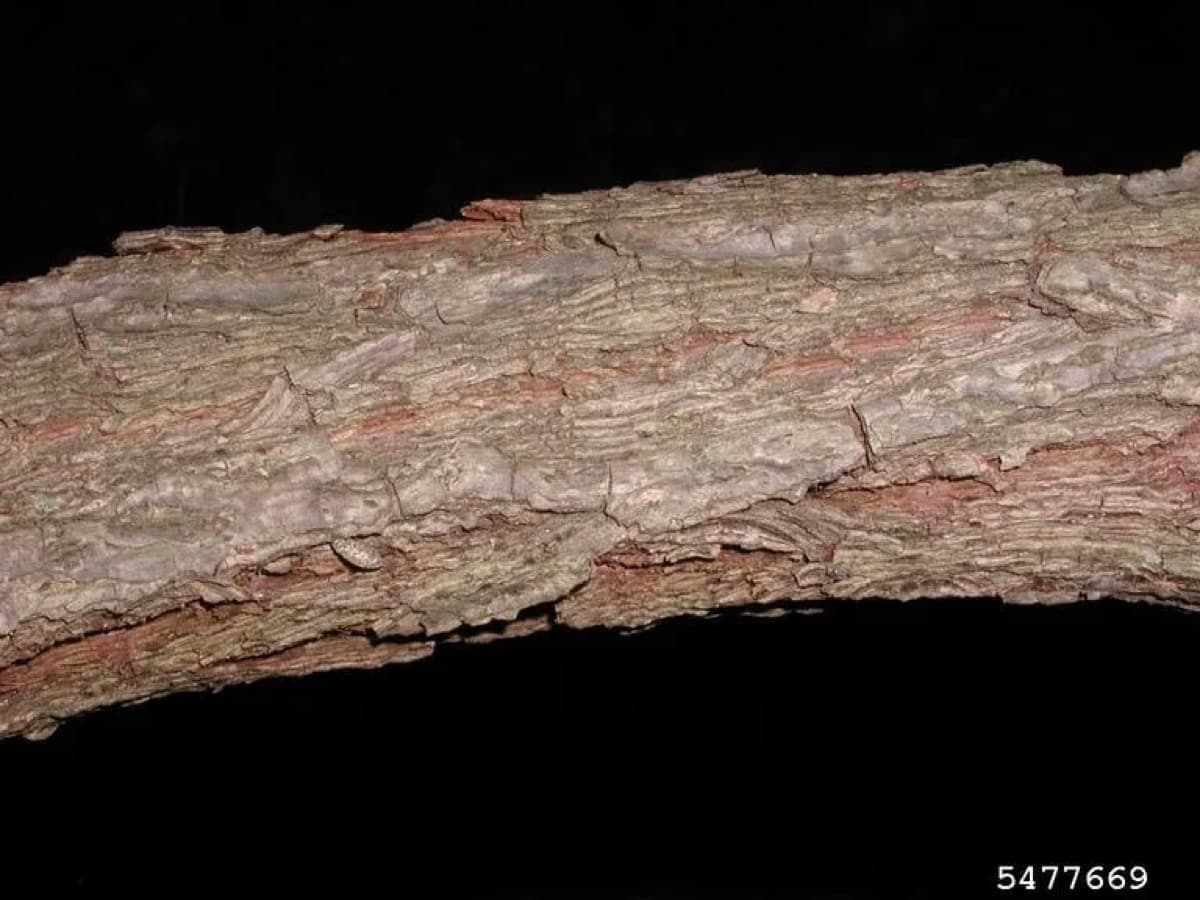
River Grape
Hairy or woolly underneath. Run your thumb across the back of a leaf.
Porcelain Berry
Smooth and hairless underneath, often slightly shiny.
River Grape
Snap a pencil-thick stem: the pith inside is tan to brown.
Porcelain Berry
Snap a pencil-thick stem: the pith inside is bright white.
River Grape
Tendrils are forked (branched).
Porcelain Berry
Tendrils are unforked.
River Grape
Climbs loosely into the canopy without blanketing its host tree.
Porcelain Berry
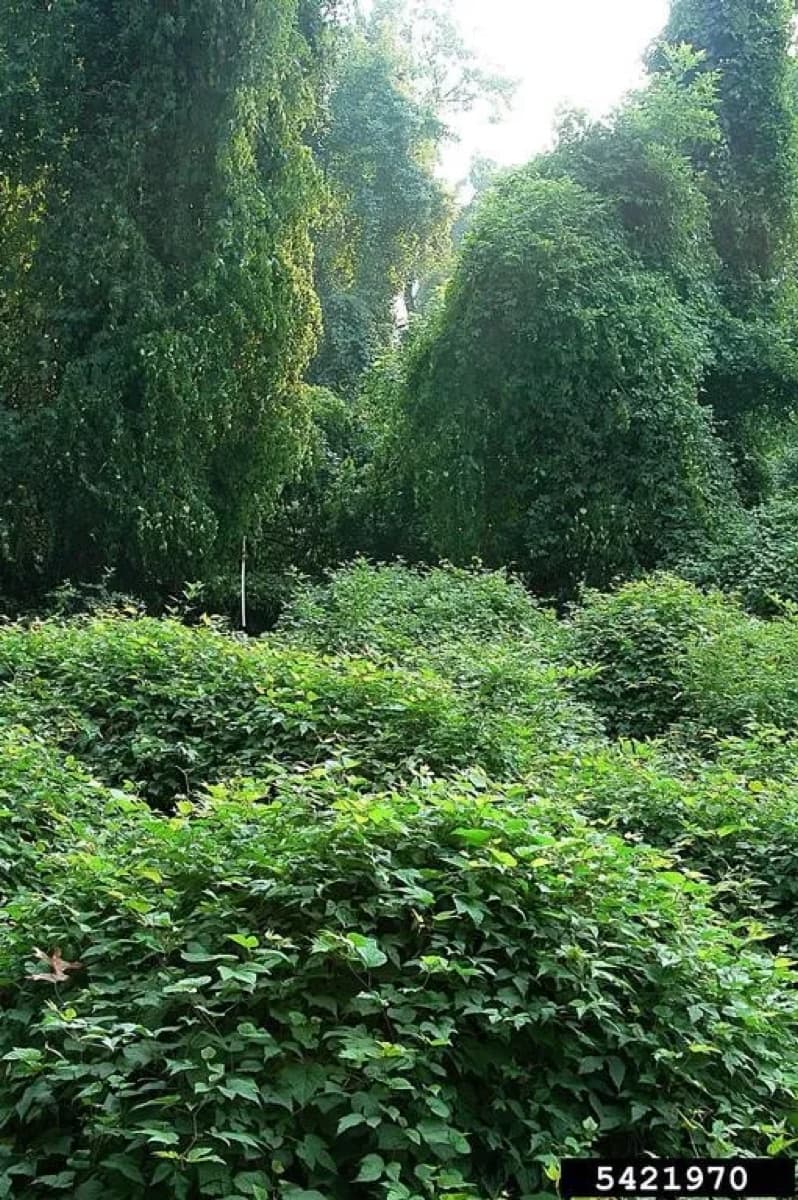
Forms dense mats that blanket and smother trees and shrubs.
River Grape
Dark purple-black grapes hanging in drooping clusters.
Porcelain Berry
Speckled berries in turquoise, lilac, and porcelain blue, often all on the same upright cluster.
When in doubt, leave the plant and ask a site lead before removing it.