🔴 Invasive - Remove
Wisteria (Chinese and Japanese)
Wisteria sinensis, W. floribunda
This is an invasive species that harms native ecosystems. It should be removed when found to protect local plant and wildlife habitats.
Wisteria sinensis, W. floribunda
This is an invasive species that harms native ecosystems. It should be removed when found to protect local plant and wildlife habitats.
A heavy woody vine with compound leaves and hanging clusters of fragrant purple flowers in spring. Escaped from gardens it climbs and strangles trees, its stems thickening into trunks that can pull down a canopy.
Native to: China and Japan
Imported in the 1810s and 1830s as an ornamental for porches and arbours. Old plantings around house sites, cemeteries and parks are where most wild stands begin.
Twines tightly around trunks and girdles trees as it thickens, and its weight breaks limbs. Dense mats shade out everything beneath. It spreads by runners as much as by seed, so a single planted vine becomes an acre.
Colour and texture: Fresh mid-green; older vines are smooth and grey-barked.
Leaves: alternate, pinnately compound with 7–13 (Chinese) or 13–19 (Japanese) leaflets.
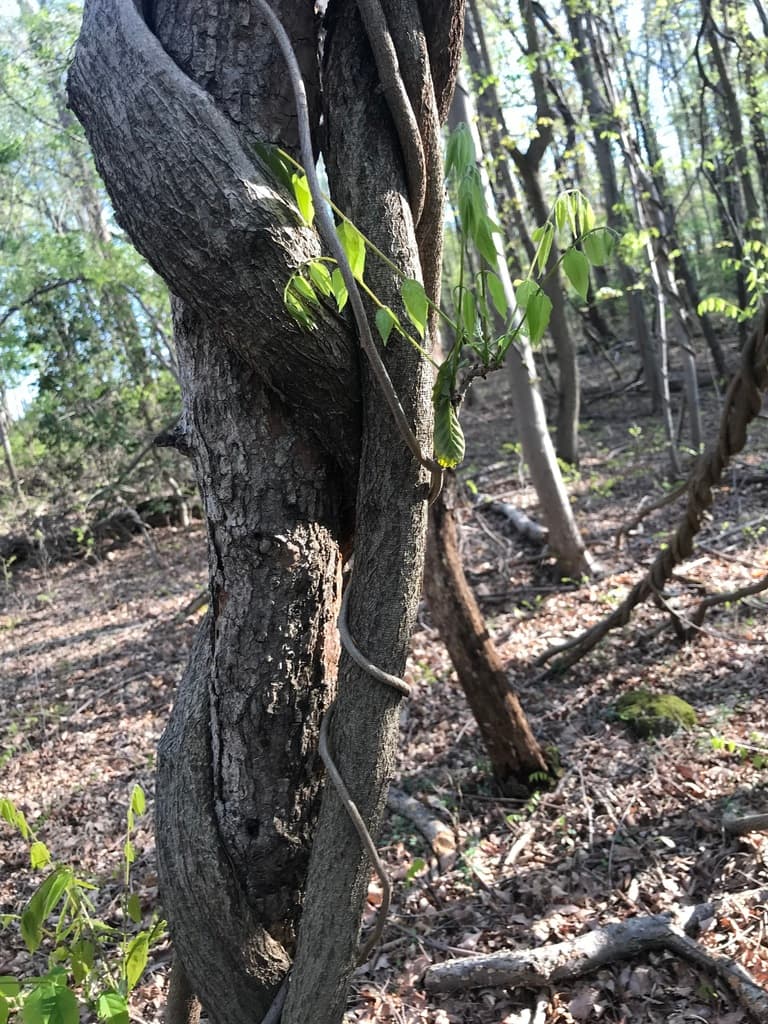
Stems: twine tightly; older vines are smooth, grey, and can be thicker than an arm.
Flowers: long drooping clusters of purple, fragrant flowers in April–May, usually before the leaves are fully out.
Pods: velvety, bean-like, 4–6 inches, persisting into winter.
Pods August through the winter.
Flat, velvety grey-green bean pods four to six inches long, hanging in bunches, drying brown and splitting open with an audible snap.
Why it matters: Velvet pods say Chinese or Japanese wisteria; our native American wisteria has smooth, hairless ones. A pod-covered vine also tells you the stand is old enough to be girdling trees.
A woody vine climbing a tree. This is the safe way to free a tree: you never pull a vine down out of a canopy.
Avoid: Do not haul the vine down. It is tangled into the branches, and pulling brings down deadwood on top of you.
A woody crown too big to pull and too stubborn to cut: wineberry, multiflora rose, barberry, bush honeysuckle, tree seedlings.
It can stay on site. Cut vine and wrenched crowns can stay. Pile them off the ground; wisteria re-roots from stems left lying on soil.
There is a native wisteria, it is planted in gardens too, and it does not strangle trees. The flowers tell you which one you have, and so does the calendar.
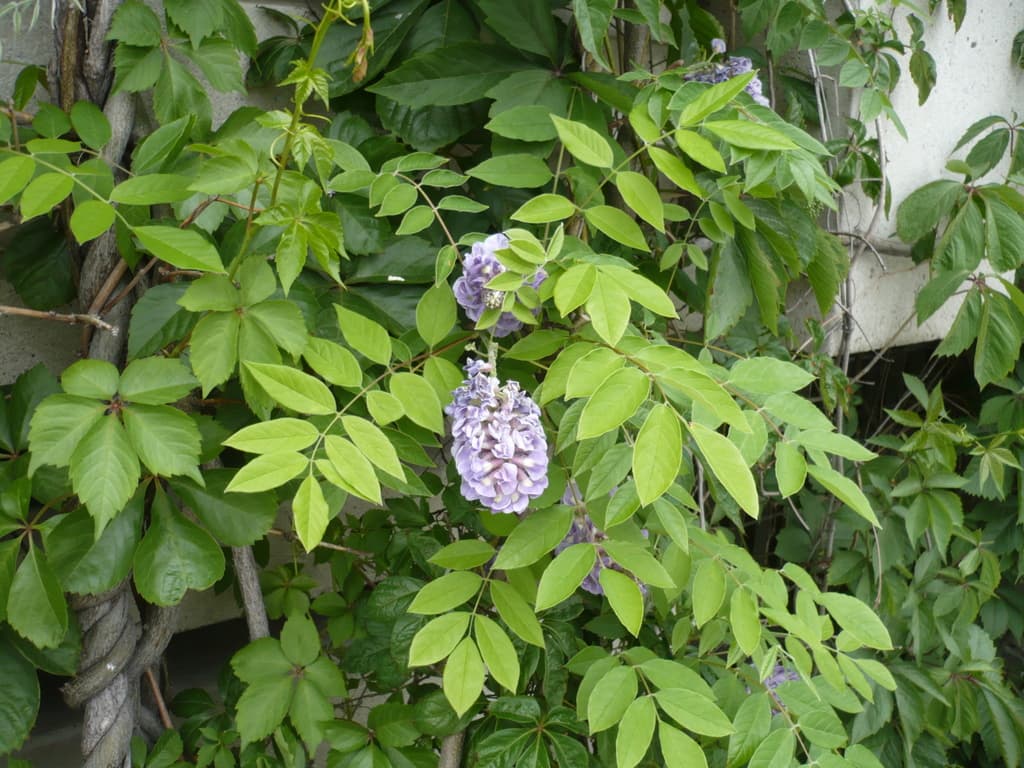
American Wisteria
Wisteria frutescens
Native: keepA short, dense cluster, out after the leaves.
Avoid: Do not clamp halfway up the stem. It snaps, and the crown stays in the ground and re-sprouts.
Before the first cut: Cut the section between your low and high cuts right out so the vine cannot reconnect, then go after the crown.
Cut and dig. Only very young plants pull cleanly; once wisteria is woody, cut every stem at ground level and again as high as you can reach, then remove the section between so it cannot reconnect. Dig or wrench out the root crown; any root fragment left re-sprouts, and repeated cutting through the season is what exhausts it.
Best window: winter and early spring when the vines are easy to trace, before flowering.
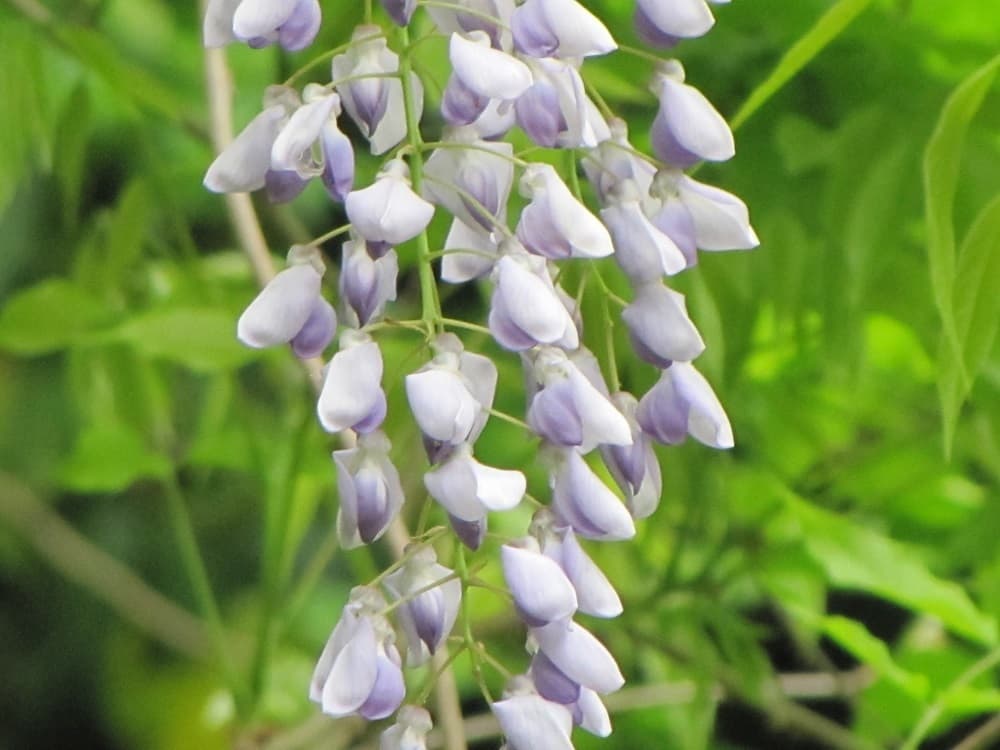
Chinese / Japanese Wisteria
Wisteria sinensis, W. floribunda
A long, loose, hanging raceme in April.
American Wisteria
Short, dense and stubby, two to six inches, opening all at once in June, AFTER the leaves are out.
Chinese / Japanese Wisteria
Long and loose, six inches to well over a foot, hanging in April, BEFORE or with the leaves.
American Wisteria
Smooth and hairless.
Chinese / Japanese Wisteria
Velvety, felted grey-green, four to six inches, splitting open with an audible snap.
American Wisteria
Climbs politely. It does not thicken into a trunk or girdle what it climbs.
Chinese / Japanese Wisteria
Stems thicken into trunks and spiral tight enough to bite into the bark and girdle the tree, and their weight brings down limbs.
When in doubt, leave the plant and ask a site lead before removing it.